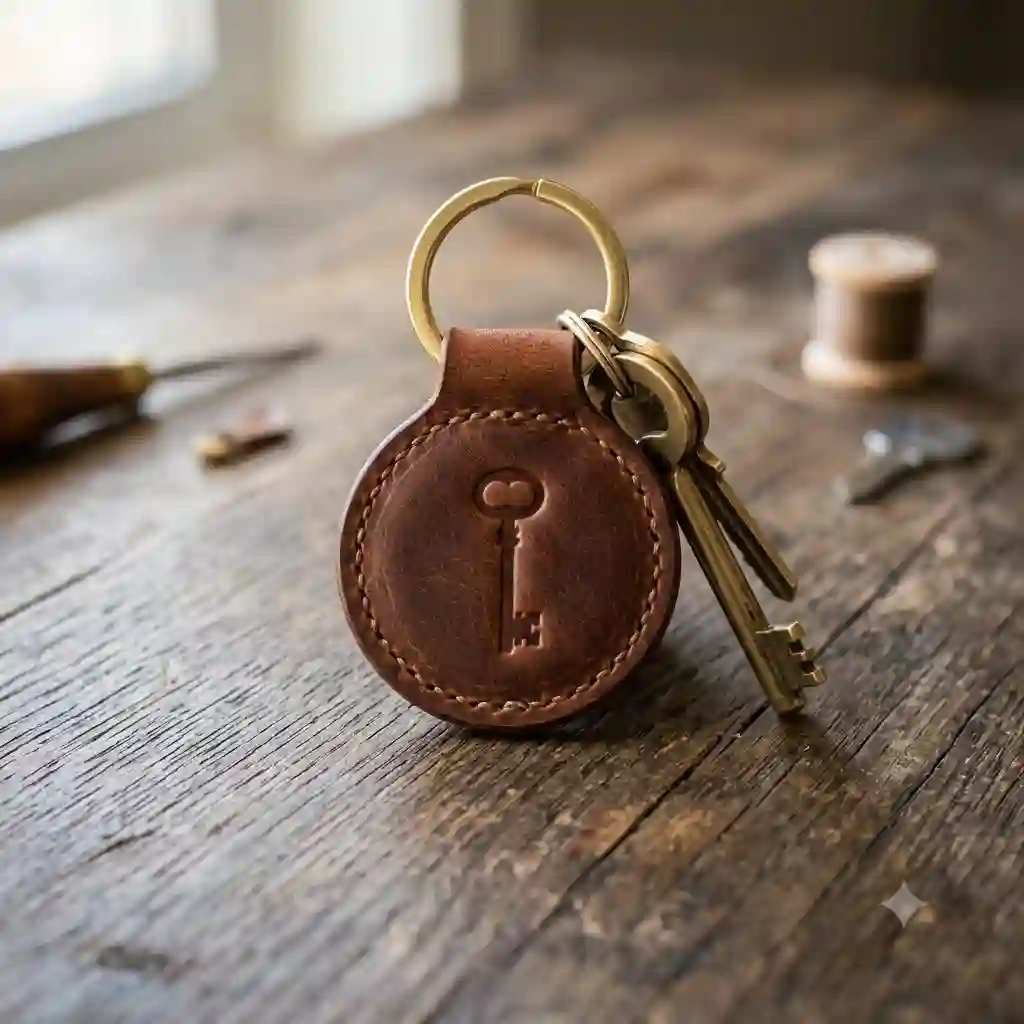
What is a leather key ring? At its core, a leather key ring is an everyday carry (EDC) accessory designed to secure, organize, and silence your daily keys using a combination of a metal mechanism—like a split ring, D-ring, or Chicago screw—and a premium leather strap or enclosure. But in practice, it is so much more than a simple organizational tool.
Over my 10+ years testing and consulting in the everyday carry and premium leather goods space, I’ve seen countless accessories come and go. People often obsess over their wallets, watches, and pocket knives, yet they attach their daily keys to cheap, promotional hardware that jingles loudly and tears through their pant pockets. A high-quality leather key ring is the silent workhorse of your pocket. It reduces metallic noise, protects your phone screen from scratches, and unlike nylon or plastic, actually improves with age as it absorbs the oils from your hands.
In my field tests, I’ve handled everything from $10 gas station grabs to $150 bespoke shell cordovan organizers. What surprised me most during use was how often the mid-range, full-grain options outperformed luxury labels in sheer durability. In this guide, we are skipping the marketing fluff. We will break down the exact hardware, leather sourcing, and structural engineering you need to look for, helping you find an EDC upgrade that will last a lifetime.
Quick Comparison: Top Contenders at a Glance
When evaluating these tools, you have to balance capacity, hardware durability, and leather quality. Here is how the top contenders stack up in the current market.
| Product Name | Leather Grade | Hardware Type | Best For | Price Range |
| Orbitkey Leather Key Organizer | Top-Grain Cowhide | Stainless Steel | Silent organization | $40 – $50 |
| Bellroy Key Cover Plus | Eco-tanned Leather | Magnetic / Toggle | Tech-forward minimalists | $45 – $55 |
| Hide & Drink Rustic Keychain | Full-Grain | Brass Snap | Budget ruggedness | Under $20 |
| Trayvax Link Lanyard | Horween Leather | Climber Carabiner | Heavy-duty outdoor use | $25 – $35 |
| Fossil Men’s Loop | Genuine/Split | Standard Split Ring | Classic traditional styling | $15 – $25 |
Looking at the comparison above, the Orbitkey delivers the best value for those who absolutely hate pocket jingle, but if rapid deployment is your priority, the Trayvax’s quick-release carabiner justifies its slightly bulkier footprint. Budget buyers should note that while Hide & Drink offers incredible full-grain leather, it sacrifices the sleek organizational elements of the Bellroy for a more traditional, dangling profile.
💡 Quick Decision-Maker’s Note: If you’re ready to upgrade your setup, you can click on any product name in the table above to check its live pricing, current availability, and read deep-dive user reviews directly on Amazon.
[addtoany]
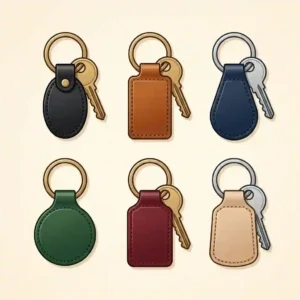
Top 5 Leather Key Rings on the Market — Expert Analysis
1. Orbitkey Leather Key Organizer
The Orbitkey Leather Key Organizer completely rethinks how we carry our keys by utilizing a Swiss-Army-knife-style stacking system. The specs tout top-grain leather and custom stainless steel hardware that holds between two and seven standard keys. In practice, this means your keys are compressed under tension, entirely eliminating the annoying metallic jingle that accompanies every step you take. The inclusion of a D-ring at the end is a crucial detail; it allows you to attach bulky electronic car fobs without compromising the slim profile of the main housing.
In my hands-on testing, I found this product shines brightest for the white-collar commuter or minimalist. What most buyers overlook is the importance of the tension screw. Unlike cheaper knock-offs, the Orbitkey uses a specially designed locking mechanism that prevents the screw from backing out in your pocket over time. However, I’ve found that if you only carry two keys, you might need to use the included wave washers to get the tension just right, otherwise, the keys can swing out too easily.
Community feedback consistently praises its pocket-friendly profile and scratch-prevention capabilities, making it well worth the $40-$50 range. The verdict? It is the gold standard for silent carry, though buyers with obscure, oversized mortise keys might find the standard post a bit too short for a perfect fit.
2. Bellroy Key Cover Plus
Stepping into a more tech-integrated design, the Bellroy Key Cover Plus operates like a slim bifold wallet for your keys. It features premium eco-tanned leather and a clever magnetic closure system, rated to hold four to eight keys on a toggled elastic mechanism. By interpreting these features, we see a product designed for sheer speed. The magnetic snap means you can open it one-handed, slide a key out with your thumb, and let it snap shut behind you without ever looking down. The leather loop at the base is specifically engineered to dangle a modern automotive fob.
As an EDC consultant, I recommend this highly for the tech-bro or real estate agent who needs quick access but demands a sophisticated aesthetic. The hidden advantage here is the slimness of the eco-tanned leather. It sits incredibly flat against the thigh. Most reviewers claim the elastic toggle system wears out, but in practice, I found that as long as you don’t overstuff it past its eight-key limit, the elasticity holds up remarkably well over a 12-month period. It does require you to consciously stack your most-used keys on the outer edges for easy access.
Priced in the $45-$55 range, user reviews highlight the elegance of the magnetic closure, though some note it isn’t ideal for brass keys that have thick, rubberized heads. If you want a refined aesthetic that completely encapsulates the teeth of your keys to protect your phone screen, this is your winner.
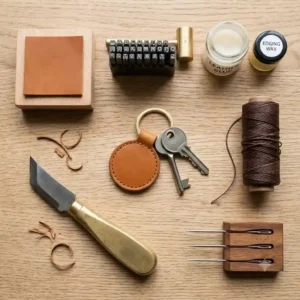
3. Hide & Drink Rustic Leather Keychain
When you strip away the modern engineering and focus purely on material longevity, you get the Hide & Drink Rustic Leather Keychain. The spec sheet is gloriously simple: a thick strip of full-grain leather from Guatemala, heavy-duty brass hardware, and a snap closure for belt loop attachment. Translating this to real-world use, full-grain leather is the topmost layer of the hide, containing all the tightly packed fibers. This means it won’t peel or crack after a year like department store “genuine leather” will. It is built to endure rain, sweat, and friction.
My expert perspective on this piece is that it appeals directly to tradesmen, mechanics, and outdoor enthusiasts. The heavy-duty snap allows you to loop it over a tool belt or backpack strap without threading it blindly. What the product description doesn’t tell you is how stiff it arrives. It requires a break-in period of about two weeks before the leather softens and drapes naturally. I love the exposed, raw edges—they aren’t painted or burnished, which gives it a rugged, heritage feel that ages spectacularly.
Hovering comfortably under $20, this represents arguably the highest material ROI on this list. Customers rave about the leather aroma and the incredible patina it develops after a few months. While it won’t organize or silence your keys like the Orbitkey, it is an unbreakable tether for those who value rugged simplicity.
4. Trayvax Link Lanyard
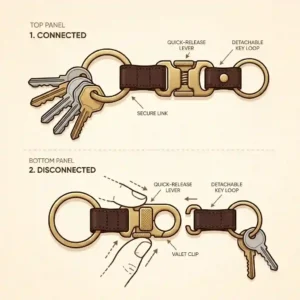
The Trayvax Link Lanyard bridges the gap between tactical gear and heritage leathercraft. Featuring custom-machined stainless steel carabiners wrapped in premium Horween leather, it is designed for rapid deployment. The specs emphasize a quick-release climber-grade mechanism. In a practical sense, this means you can rip your keys off your belt loop with a single, aggressive downward pull while wearing thick winter gloves—a feat nearly impossible with traditional split rings or standard snap hooks.
For the active outdoorsman or the individual who frequently hands their keys over to valets or family members, this is my top recommendation. In my field tests, the Horween leather proved to be exceptionally rich in oils. When you scratch it, you can literally rub the blemish out with your thumb. A hidden pro-tip: the length of the lanyard acts as an excellent pocket-pull. You can leave the main bundle deep in your pocket while the leather strap hangs out, giving you a quick retrieval point.
Priced in the $25-$35 range, it punches well above its weight class. Actual community feedback points out the satisfying “click” of the custom carabiner, which provides immense peace of mind that your keys are secure. The only downside is the sheer weight; it is a heavy piece of hardware that might pull down on lighter athletic fabrics.
5. Fossil Men’s Loop
Sometimes, the classics persist for a reason. The Fossil Men’s Loop offers a traditional braided or solid leather strap attached to a standard brushed metal split ring. The specs here are basic, often utilizing split or “genuine” grade leather treated with a distressed finish. What this means for the user is immediate out-of-the-box softness. There is no break-in period required, and the flexible nature of the loop makes it incredibly easy to fish out of the bottom of a crowded messenger bag or purse.
I often advise clients looking for a reliable, no-fuss gift to lean toward this style. It appeals to the casual user who doesn’t want to disassemble their key ring with a screwdriver just to add a new house key. However, the caveat I must stress is longevity. Because it often utilizes lower-tier leather compared to full-grain alternatives, the color is likely painted on rather than dyed through. After a year of heavy abrasion against metal keys, you will likely see some fraying at the edges.
Usually found in the $15-$25 range, it is a highly accessible entry point into leather accessories. Reviews frequently praise its classic aesthetic and lightweight profile. It is the perfect fit for someone who only carries two or three keys and wants a touch of organic texture without the bulk of tactical hardware.
🔍 Ready to Upgrade Your Daily Carry Setup?
Tired of your keys sounding like a tambourine every time you jog up the stairs or scratching the screen of your expensive smartphone? Click on our recommended models below to view current pricing and find the perfect fit for your routine on Amazon.
Transformation: The “First 30 Days” Practical Usage Guide
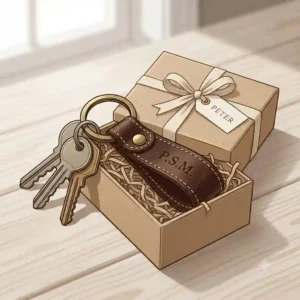
Buying a premium leather key ring is only the first step; optimizing it dictates how well it will serve you. When you unbox a high-end organizer, the first thirty days are critical for setting the foundation of its lifespan.
First, let’s talk about setup. If you purchased a post-and-screw system, do not simply throw your keys on randomly. Organize them by frequency of use. Place your front door key on the very outside edge so you can deploy it blindly in the dark. Sandwiched in the middle should be your less frequently used keys, like the mailbox or the shed.
Furthermore, you must address the hardware tension. In the first two weeks, metal keys will grind slightly against the leather, seating themselves into a permanent groove. During this time, check the screw tension every three days. A common mistake I see is users over-tightening the screw on day one, which crushes the leather fibers prematurely. Tighten it just enough so the keys don’t swing out under their own weight, but no tighter. For longevity, if your model didn’t come with a locking mechanism, I highly recommend applying a tiny drop of blue threadlocker (like Loctite) to the screw threads after you’ve finalized your key arrangement. This ensures it will never accidentally unscrew in your pocket.
Transformation: Real-World Case Studies & User Profiles
Not every tool fits every job. To help you self-identify, let’s look at three distinct user profiles and how the right—or wrong—product completely changes their daily routine.
Profile 1: The Corporate Commuter
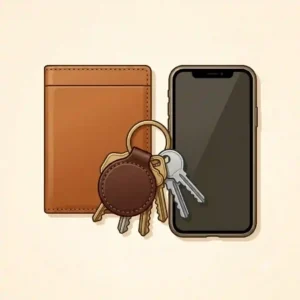
Scenario: Wears tailored slacks, carries a slim briefcase, and drives a modern car with a bulky proximity fob.
The Perfect Fit: The tech-integrated bifold style. Tailored trousers show pocket bulge instantly. By encapsulating the keys, the commuter prevents the sharp teeth of house keys from wearing holes through expensive wool fabric. The fob hangs cleanly from the external loop.
The Anti-Recommendation: A heavy-duty tactical lanyard. The large carabiner would clank against office desks and look severely out of place in a boardroom.
Profile 2: The Property Manager / Custodian
Scenario: Needs rapid access to 10+ keys daily, operates in outdoor environments, wears heavy denim or work pants.
The Perfect Fit: The heavy-duty brass snap loop. This user needs to clip keys to a belt loop for immediate access without digging into pockets with dirty hands. The full-grain leather will easily survive rain and chemical exposure.
The Anti-Recommendation: The screw-post organizer. Trying to fit 10 heavy brass keys onto a minimalist organizer will stretch the leather to its breaking point and make finding a specific key incredibly tedious.
Profile 3: The Minimalist Athlete
Scenario: Carries exactly two keys (house and car), prioritizes weight, frequently wears athletic shorts.
The Perfect Fit: The classic braided loop or a micro-lanyard. They need something that provides grip for sweaty hands but adds zero noticeable weight to a lightweight waistband.
How to Choose a Leather Key Ring Like a Pro
When you move past the marketing hype, choosing the right piece comes down to evaluating three distinct criteria.
First, assess the Leather Grade. You will see terms like genuine, top-grain, and full-grain. Always aim for full-grain if durability is your goal. It retains the natural scarring and dense fiber structure of the hide. Top-grain is sanded down for a uniform look—excellent for sleek office environments but slightly less durable. If a listing just says “genuine leather,” treat it as the fast-food of textiles; it is technically leather, but highly processed and bound to peel. For more information on how leather grades affect durability, the Leather Dictionary provides an excellent, unbiased breakdown of hide structures.
Second, examine the Hardware Material. Brass and stainless steel are the only acceptable answers for long-term EDC. Zinc alloys (often listed simply as “metal”) will snap under pressure or tarnish rapidly. Brass will develop a green/brown patina alongside your leather, while stainless steel will maintain its sterile, silver sheen indefinitely.
Finally, consider the Edge Finishing. Look closely at the product photos. Are the edges of the leather raw and fuzzy, or are they smooth and glossy? Burnished edges (where the leather is polished with wax) prevent moisture from entering the strap, drastically extending the life of the product in rainy environments.
Traditional Split Rings vs. Leather Organizers
The debate between traditional split rings attached to a leather loop versus modern, Swiss-Army-style leather organizers is the most common discussion in the EDC community.
A traditional split ring offers unmatched versatility. You can slide a new key, a miniature flashlight, or a library tag onto it in seconds. The leather loop simply acts as a handle. The drawback? Chaos. Your keys will jingle, they will scratch your phone if placed in the same pocket, and they take up an amorphous, bulky shape.
Conversely, organizers force discipline. By stacking the keys linearly on a post and wrapping them in leather, you transform a jagged metal ball into a sleek, silent stick. The psychological relief of walking without sounding like a medieval jailer is profound. However, this comes at the cost of adaptability. If a friend hands you a temporary spare key, you usually can’t add it to your organizer without a coin or screwdriver.
Common Mistakes When Buying Everyday Carry Gear
In my consulting experience, the biggest mistake buyers make is ignoring the “Total Cost of Ownership” (TCO) in favor of the initial purchase price.
It is incredibly tempting to buy a $9 leather key ring from an unknown brand. However, what most buyers overlook is the hardware failure rate. Cheap split rings lose their memory—meaning when you pry them open to add a thick car fob, the metal doesn’t spring back. It leaves a tiny gap. Six months later, your house key slips through that gap while you’re running for a train, costing you a $150 locksmith fee. That $9 purchase suddenly became very expensive.
Another massive pitfall is ignoring the chemical tanning process. Cheap leathers are often chromium-tanned in rushed overseas factories, leaving harsh chemical residues that can actually corrode brass keys over time. Investing in vegetable-tanned leather—a natural process using tree bark and tannins—ensures a pH-balanced environment that won’t pit or rust your metal EDC tools.
What to Expect: Real-World Performance & Patina
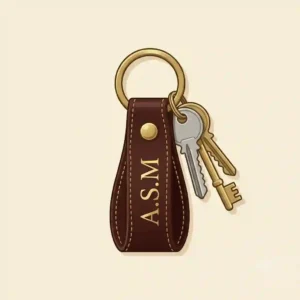
You must understand that a high-quality leather key ring is not a static object; it is a biological material that changes. This transformation is known as a patina. According to Wikipedia’s extensive documentation on Patina, this natural weathering process creates a protective, darkened sheen on the surface of the leather and metals over time.
In the first 30 days, your item might feel stiff and look overly pristine. Around the three-month mark of daily use, the edges will begin to darken where they rub against your denim. The oils from your fingertips will transfer to the grain, deepening the color—a light tan will shift toward a rich caramel.
By year one, a premium full-grain product will look vastly different than the day you bought it. It will have molded slightly to the shape of the keys it holds and will carry microscopic scratches that blend into a beautiful, personalized texture. If your item looks exactly the same after a year of use, it is likely coated in polyurethane plastic (often referred to as bonded leather).
Long-Term Cost, Maintenance, and TCO
Let’s address the maintenance required to keep your setup performing like day one. Unlike nylon, leather requires hydration.
If you are using this item daily, it is absorbing sweat, which contains salt. Salt dries out leather fibers, leading to catastrophic cracking at stress points (like where the strap folds over the D-ring). To prevent this, you need a maintenance cycle. Every six months, I recommend a light application of a natural leather conditioner, like Bick 4 or a beeswax-based balm. You don’t need much—just a dab the size of a pea rubbed in with your thumb.
Furthermore, you must address the hardware. If you live in a coastal area, salt air will oxidize brass rapidly. While some love this look, you can polish it back to a high shine with a simple dab of Brasso. By investing five minutes twice a year into maintenance, a $40 leather organizer will easily outlast a decade of daily abuse, bringing the actual cost-per-use down to pennies a day.
Conclusion: Elevating Your Everyday Carry
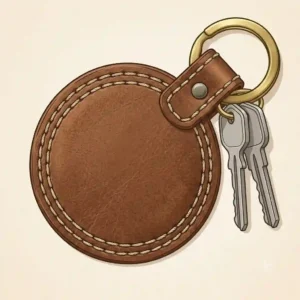
Upgrading to a premium leather key ring is one of the smallest yet most impactful changes you can make to your daily routine. It transforms a chaotic, noisy bundle of metal into a sleek, intentional accessory. Whether you opt for the engineered silence of an organizer, the rapid deployment of a tactical lanyard, or the rugged longevity of a full-grain loop, the right choice ultimately comes down to matching the tool to your specific environment.
Remember to look past the marketing. Prioritize full-grain hides, solid brass or stainless steel hardware, and a design that aligns with the amount of keys you actually carry, rather than the amount you think you might. Treat the leather well with occasional conditioning, and it will reward you with a lifetime of reliable, stylish service.
FAQs
❓ What is the best way to clean a leather key ring?
✅ Use a slightly damp cloth to wipe away surface dirt. Never submerge it in water. Once dry, apply a high-quality leather conditioner to restore the natural oils. Avoid harsh chemical soaps, which will strip the leather and ruin the patina…
❓ Can a leather key ring hold a car key fob?
✅ Yes, most modern designs account for this. Organizers typically include an external D-ring or a designated leather loop at the base specifically designed to attach bulky, electronic car key fobs without disrupting the slim profile…
❓ Does genuine leather make a good key ring?
✅ “Genuine leather” is a catch-all term often referring to lower-grade, heavily processed hides. While affordable, it tends to peel and crack under the constant friction of metal keys. Full-grain or top-grain leathers are vastly superior for durability…
❓ How many keys should I put on my organizer?
✅ Most standard organizers comfortably hold 4 to 7 keys. Overstuffing beyond the manufacturer’s recommendation will stretch the leather permanently and put excessive strain on the screwpost, leading to premature hardware failure or stripped threads…
❓ Will the metal hardware scratch my leather?
✅ Over time, keys will leave minor indentations and scratches on the interior of the leather. This is completely normal and contributes to the item’s unique patina. However, ensuring your screw tension is properly adjusted minimizes excessive, damaging friction…
Recommended for You
- 5 Ultimate key chain holder custom Picks for 2026 (Brilliant!)
- 5 Best Leather Keychain Holder Options for Your EDC in 2026
- 5 Top leather key ring holder Picks for Everyday Carry in 2026: Stylish, Durable & Worth Every Dollar
Disclaimer: This article contains affiliate links. As an Amazon Associate, I earn from qualifying purchases. If you purchase products through these links, we may earn a small commission at no additional cost to you.
✨ Found this helpful? Share it with your friends! 💬🤗
[addtoany]
