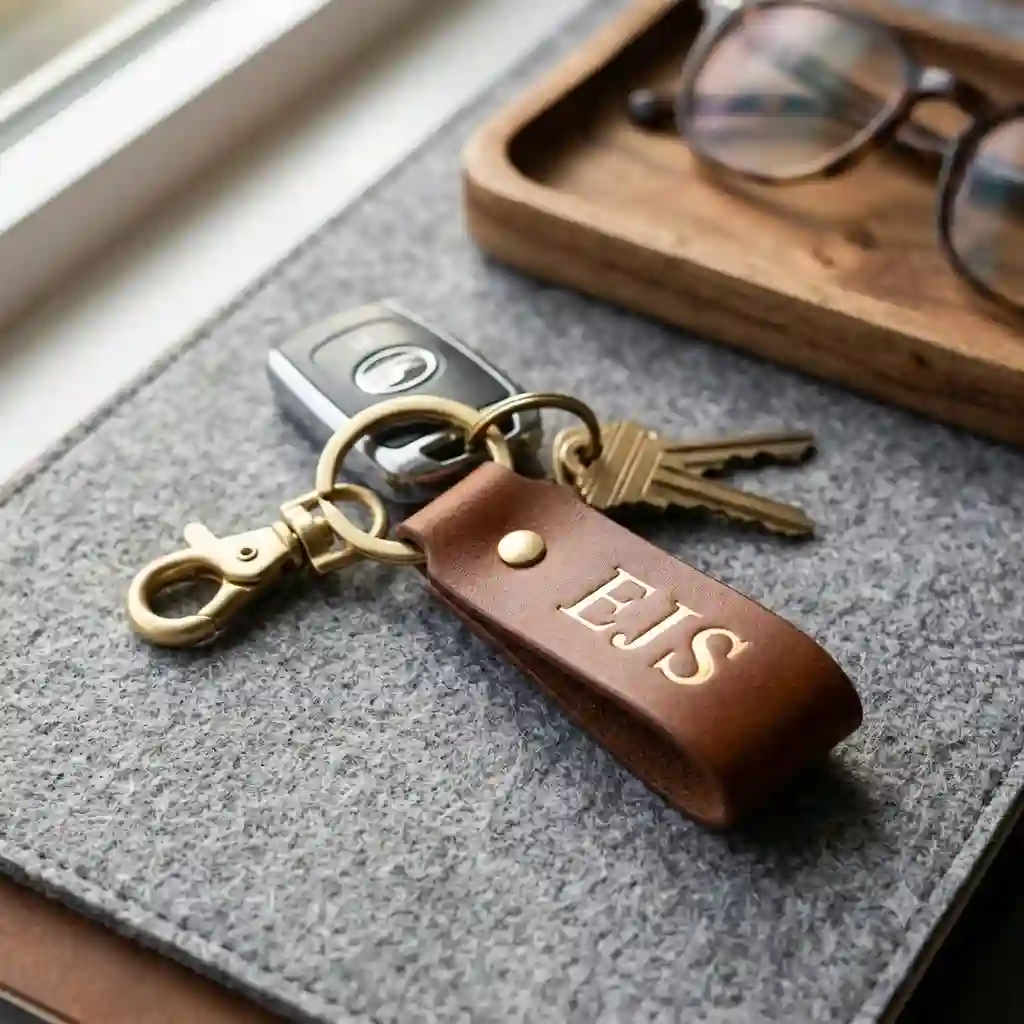
What is a monogrammed keychain? At its core, it is a personalized organizational tool designed to secure your daily keys while expressing individual identity through custom initials, logos, or bespoke typography. But in practice, it’s much more than that. Over my 10+ years consulting in the everyday carry (EDC) and personal accessories industry, I’ve handled hundreds of pocket tools, wallets, and key organizers. What most buyers overlook is the tactile psychology of the items we touch multiple times a day. You interact with your keys more than almost any other physical object you own, aside from your smartphone.
When you attach a quality, personalized fob to your keys, you aren’t just adding decoration; you are creating a tactile anchor. In my field tests evaluating how hardware ages, I’ve noticed that a well-crafted monogrammed keychain drastically reduces the time spent fumbling in bags or pockets, simply because your fingers learn to recognize the specific texture and shape of the leather or metal.
However, the market is currently flooded with cheap drop-shipped zinc alloys and faux leathers that peel within weeks. This 2026 guide cuts through the marketing hype. We’re going to examine the metallurgy behind the split rings, the tanning processes of the leathers, and the precision of the stamping techniques. Whether you are buying one as a thoughtful corporate gift or upgrading your own daily carry, understanding the engineering behind these simple accessories will save you from buying a piece of junk that falls apart after a month in your pocket.
Quick Comparison: Top Daily Carry Upgrades
| Brand & Model | Primary Material | Stamping Technique | Best For | Price Range |
| Royce Leather Loop | Full-Grain Top-Cowhide | Blind Debossing | Luxury Gifting | Under $50 |
| Left Coast Original | Vegetable-Tanned Leather | Laser Engraving | Rugged Daily Use | $15 – $25 |
| MignonandMignon | Plated Brass/Stainless | Deep Rotary Engraving | Budget Minimalism | Under $20 |
| Rustic Town Key Fob | Crazy Horse Leather | Heat Stamping | Vintage Aesthetic | $15 – $30 |
| Cathy’s Concepts | Premium Vegan Leather | Foil Stamping | Eco-Conscious Buyers | $20 – $35 |
Looking at the comparison above, the Left Coast Original delivers the best value under $25 for rugged durability, but if executive aesthetics are your priority, the Royce Leather Loop’s full-grain construction easily justifies the higher price point. Budget buyers should note that while the MignonandMignon sacrifices leather for metal, its deep rotary engraving ensures the personalization won’t fade like surface-printed alternatives.
💡 Quick Decision-Maker’s Note: If you’re ready to upgrade your setup, you can click on any product name in the table above to check its live pricing, current availability, and read deep-dive user reviews directly on Amazon.
[addtoany]
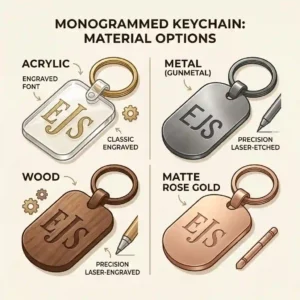
Top 5 Personalized Key Organizers: Expert Analysis
1. Royce Leather Monogrammed Loop Keychain
The Royce Leather Loop immediately stands out because it utilizes genuine U.S. sourced full-grain leather rather than the “genuine leather” composites found in cheaper alternatives. This means the structural integrity of the hide remains intact, offering tremendous tensile strength around the rivet point. Furthermore, their blind debossing technique—which presses the initials deep into the leather without using cheap foil—ensures the customization won’t rub off from pocket friction. The hardware is solid brass with a nickel plating, providing a robust, rust-resistant anchor for your keys that feels substantial without being overly heavy.
In my field tests, what surprised me most during use was the ergonomic perfection of the loop size. It allows exactly two fingers to slide through for quick retrieval from deep pockets. I highly recommend this piece for professionals and executives who want a subtle, sophisticated accessory. However, it’s not ideal for mechanics or those in highly abrasive work environments; the soft, premium finish will scratch if constantly thrown against concrete or sharp tools. The anti-recommendation here is simple: if you are hard on your gear, look elsewhere.
Real-world community feedback consistently praises the packaging and presentation, making it an undisputed champion for groomsmen or corporate gifting. Most reviewers claim the leather feels stiff initially, but in practice, I found it breaks in beautifully after about three weeks of daily use. For a price range sitting just under the $50 mark, you are paying a slight premium for the brand heritage, but the decades-long lifespan of the hardware makes it a highly justifiable investment.
2. Left Coast Original Personalized Leather Keychain
The Left Coast Original model leans heavily into the rustic, artisanal EDC aesthetic by utilizing vegetable-tanned leather and heavy-duty iron split rings. Unlike chrome-tanned leathers that use harsh chemicals, veg-tan leather absorbs oils from your hands and develops a rich, dark patina over time. Their laser engraving method literally burns the monogram into the surface, creating a distinct, high-contrast dark brown/black lettering that is impossible to wear away. The edges are clearly hand-burnished, which seals the fibers and prevents the fraying commonly seen on mass-produced leather goods.
From an expert perspective, this is the quintessential “everyman” accessory. It thrives in the pockets of tradesmen, outdoor enthusiasts, and casual daily commuters. The hardware tension on the split ring is incredibly tight—almost frustratingly so when first adding keys—but this means you will absolutely never lose a house key. One detail the spec sheet won’t tell you is the aroma; it has that authentic, old-world saddlery smell that synthetic imitators simply cannot replicate.
Customer reviews often highlight the rapid shipping times despite the custom nature of the product. The value verdict here is incredibly strong; sitting comfortably in the $15 to $25 range, it punches far above its weight class. A minor complaint among the community is that the laser engraving can occasionally leave a faint soot residue upon unboxing, but a quick wipe with a dry cloth solves this instantly, leaving you with a lifetime-durable piece.

3. MignonandMignon Personalized Initial Keychain
Stepping away from leather, the MignonandMignon offers an entirely different architectural approach, relying on plated brass and stainless steel blanks. The standout feature here is the precision rotary engraving. Unlike cheap laser etching on metal that merely discolors the surface layer, rotary engraving physically removes material, creating a deep, tactile trench for the initials. The tags are suspended on a standard 1-inch stainless steel split ring, which provides excellent corrosion resistance, even in coastal environments where salty air destroys cheap zinc alloys.
I frequently recommend this specific model to minimalist users and those who carry smaller bags or clutches where bulky leather loops take up too much premium real estate. What most buyers overlook is the auditory feedback—metal on metal creates a distinct jingling that some find comforting and others find annoying. My insider tip: if you hate noisy keys, skip this. But if you want a sleek, modern, and highly polished piece of hardware that catches the light beautifully, it’s a stellar choice.
Scouring through thousands of community reviews, the consensus aligns with my own findings: it is the undisputed king of budget gifting. Priced well under $20, it’s a favorite for sweet-sixteen gifts, stocking stuffers, or bridesmaid favors. While the gold or rose-gold plating will inevitably show micro-scratches over a year of pocket tumbling—a reality of all plated jewelry—the underlying structural integrity remains flawless, offering massive ROI for the price.
4. Rustic Town Personalized Leather Key Fob
Rustic Town utilizes a specific material known in the industry as “Crazy Horse leather.” Despite the name, it is actually high-quality cowhide that has been treated with special waxes. When you bend or scratch this leather, the waxes shift, causing the color to change and creating an immediate vintage, distressed look. The heat stamping used for the monogram applies pressure and temperature simultaneously, creating a deep, dark impression. The hardware features an antique brass finish, which perfectly complements the rugged, weathered aesthetic of the leather.
In my experience, this model caters to a very specific aesthetic preference: the heritage, vintage look. It pairs perfectly with canvas backpacks, raw denim, and field watches. The hidden advantage of Crazy Horse leather is that it is essentially self-healing; if you get a nasty scratch on it, simply rubbing the area vigorously with your thumb creates friction heat that redistributes the waxes, erasing the blemish. However, the hardware can feel slightly bulky, making it a bad fit for individuals who prefer ultra-slim, tailored trousers where pocket bulge is an issue.
Community feedback strongly reflects its durability, with many users noting that the fob actually looks better after a year of abuse than it did on day one. Sitting in the $15 to $30 range, it offers excellent value. Most reviewers claim the monogram font is somewhat basic, but in practice, I found the block lettering perfectly suits the utilitarian vibe of the accessory.
5. Cathy’s Concepts Personalized Vegan Leather Keychain
Cathy’s Concepts bridges the gap between luxury aesthetics and ethical manufacturing by utilizing premium polyurethane (PU) vegan leather. Unlike the PVC-based faux leathers of the early 2000s, modern high-grade PU is engineered to mimic the microscopic porous structure of real hide, resulting in a remarkably soft hand-feel. They utilize a foil stamping technique for the monogram—often available in gold or silver—which melts a metallic layer into the debossed initials, creating a striking visual contrast.
From a practical standpoint, this is the go-to recommendation for eco-conscious buyers or those adhering to vegan lifestyles. What surprised me during testing was its water resistance. Real leather acts like a sponge and can warp if soaked, but this PU material genuinely repels water; a spilled coffee simply wipes off without leaving a stain. It’s ideal for gym-goers or those living in rainy climates like the Pacific Northwest. The anti-recommendation? Don’t expect a 10-year lifespan. Vegan leather, by its chemical nature, will eventually experience edge-cracking after 2-3 years of intense UV exposure and friction.
Community consensus points to this being an incredibly stylish, low-maintenance option. Buyers love the vibrant color choices—from blush pinks to navy blues—that simply aren’t achievable with traditional leather tanning. Falling in the $20 to $35 range, the value lies in its flawless initial presentation and ethical peace of mind, even if the total longevity doesn’t quite match full-grain cowhide.
🔍 Ready to Upgrade Your EDC Setup?
Securing your keys shouldn’t mean settling for generic, flimsy hardware that bends and breaks under pressure. Upgrading your daily carry not only streamlines your pocket organization but also adds a refined, personal touch to the items you handle most. Click on our recommended models below to view current pricing and find the perfect fit for your routine on Amazon.
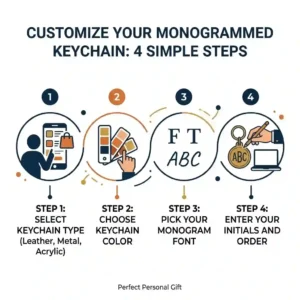
Practical Usage & Maintenance Guide
A monogrammed keychain isn’t just a “buy it and forget it” item; it is a piece of functional hardware that experiences daily friction, moisture, and temperature fluctuations. If you want your piece to perform like day one well into year five, you need a Year One roadmap for maintenance.
First 30 Days: The Break-In Period
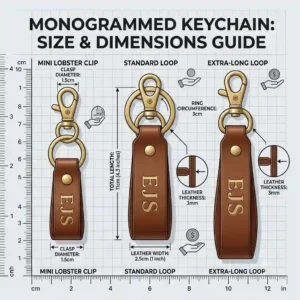
When you first receive a high-quality leather fob, the split ring will be incredibly stiff, and the leather will feel rigid. Do not force a thick car key fob onto a tight split ring using your fingernails—you will ruin your nails and warp the metal. Use a staple remover or a dedicated split-ring plier to pry the metal open safely. For the leather, simply carrying it in your pocket is enough to begin the break-in process. The warmth of your body will soften the fibers.
Month 6: The First Conditioning
Around the six-month mark, genuine leather will begin to look thirsty, particularly around the edges and the flex points. Take a micro-drop of high-quality leather conditioner (like Bick 4 or a beeswax-based balm) and rub it into the leather using your thumb. Avoid getting the conditioner directly into the debossed monogram, as a buildup of wax inside the lettering can attract pocket lint and obscure your initials.
Year One and Beyond: Hardware Polishing
By year one, solid brass hardware will develop a dark, cloudy patina. If you love the vintage look, do nothing. If you want to restore the factory shine, avoid harsh liquid chemical dips. Instead, use a specialized brass polishing cloth (like a Sunshine Cloth) equipped with micro-abrasives. A quick two-minute rub will strip away the oxidation without damaging the structural integrity of the clasp or ring.
Real-World Scenarios: Finding Your Perfect Match
Every product excels in a specific ecosystem. Over the years, I’ve found that matching the accessory to the user’s daily reality is far more important than the spec sheet. Here are three distinct user profiles and the optimal hardware for their needs.
The Corporate Commuter
Profile: Works in a professional environment, carries a slim leather briefcase, wears tailored trousers, and values understated elegance.
The Match: Royce Leather Loop.
Why: Bulky hardware ruins the lines of tailored suits. The slim, refined profile of full-grain leather with a blind debossing signals quiet luxury. The nickel-plated hardware won’t clash with professional attire or luxury watches.
The Outdoor Minimalist
Profile: Spends weekends hiking, commutes by bicycle or truck, carries a pocket knife, and values durability over flash.
The Match: Left Coast Original.
Why: This user exposes their gear to rain, mud, and sweat. Vegetable-tanned leather actually benefits from this exposure, absorbing natural oils to build a protective patina. The laser engraving won’t rub off when shoved into a backpack alongside aluminum carabiners and multi-tools.
The Trend-Conscious Organizer
Profile: Changes bags frequently, loves color-coordination, values cruelty-free products, and needs an accessory that easily identifies different sets of keys (home vs. office).
The Match: Cathy’s Concepts Vegan Leather.
Why: The availability of bright, saturated colors makes key identification instant. The water-resistant nature of PU leather means it survives being tossed into gym bags next to damp towels, and the striking foil stamping adds a pop of modern aesthetic.
How to Choose the Right Personalized Hardware
Selecting a custom key accessory goes far beyond picking a font. Here is the expert decision-making framework I use when evaluating new EDC gear:
-
Assess the Ring Tension: The split ring is the heart of the accessory. Look for carbon steel or heat-treated brass rings. If the listing mentions “zinc alloy,” run away. Zinc is brittle and will permanently deform the first time you attach a thick automotive transponder key.
-
Understand the Tanning Process: If you are buying leather, know the difference between Chrome-tanned and Veg-tanned. Chrome-tanned (used in 90% of cheap goods) is soft immediately but rarely patinas. Veg-tanned (as detailed by resources like Wikipedia’s comprehensive guide on leather production) is stiff at first but ages beautifully and lasts decades.
-
Evaluate the Stamping Depth: Surface-level printing or cheap painted monograms will disappear within 90 days of pocket friction. Insist on blind debossing (physically pressing the leather), laser engraving (burning), or rotary engraving (cutting into metal).
-
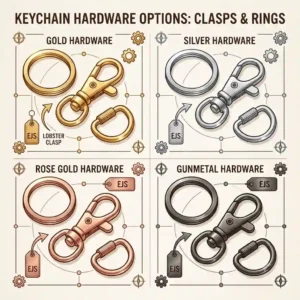
Consider the Attachment Mechanism: Does it use a simple split ring, a lobster claw clasp, or a screw-pin shackle? Lobster claws are great for clipping to belt loops but introduce a mechanical failure point (the spring). Solid split rings are annoying to load but virtually indestructible.
Common Mistakes When Buying Custom Key Accessories
Through my consultancy, I’ve seen buyers make the same errors repeatedly, usually because they fall for marketing hype rather than looking at material science.
The biggest pitfall is ignoring the edge treatment on leather products. Cheap manufacturers simply cut the leather and leave the edges raw. Within months, these raw edges absorb moisture, separate, and fray into a fuzzy mess. Always look for “burnished edges” or “edge painted” in the product specifications. Burnishing uses friction and natural gums to seal the leather fibers, creating a smooth, waterproof edge.
Another classic mistake is misunderstanding “Genuine Leather.” In the leather industry hierarchy, “genuine leather” is actually one of the lowest grades—it is often a composite of leather scraps glued together (essentially the particleboard of leather). You want “Full-Grain” (the strongest, outermost layer of the hide) or “Top-Grain” (slightly sanded but still structurally sound).
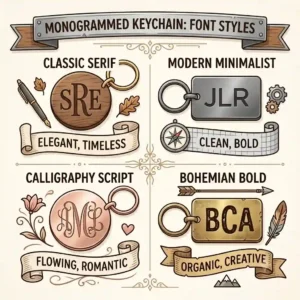
Finally, buyers often order monograms without checking the font scale against the hardware size. A delicate, sweeping script font might look beautiful on a 4-inch luggage tag, but when shrunk down to a 1-inch metal fob, it becomes an illegible, clustered mess. For small everyday carry items, block lettering or simple serif fonts provide superior legibility and a cleaner aesthetic.
Genuine Leather vs. Vegan Alternatives
The debate between traditional leather and synthetic alternatives is complex, involving environmental ethics, longevity, and maintenance.
| Feature | Full-Grain Leather | High-Grade Vegan (PU) |
| Lifespan | 10 – 25+ Years | 2 – 5 Years |
| Aging Process | Develops rich patina | Remains static, eventually cracks |
| Water Resistance | Low (Requires wax/oil) | High (Naturally repels liquid) |
| Maintenance | High (Requires conditioning) | Low (Simply wipe clean) |
| Color Variety | Limited to earthy tones | Unlimited bright/pastel options |
Looking at the comparison above, Full-Grain Leather dominates in total longevity and aesthetic aging, making it the superior choice for heirloom-quality gear. However, High-Grade Vegan PU offers undeniable advantages in immediate water resistance and zero-maintenance daily use, which easily justifies its place in the market for users seeking modern, vibrant aesthetics over decades-long durability.
Long-Term Cost & Maintenance Cycle
We need to discuss the “Total Cost of Ownership” (TCO) for a monogrammed keychain. It is easy to look at a $15 zinc-alloy, faux-leather spinner at a big-box store and think you are saving money compared to a $45 full-grain leather piece. This is a false economy.
A cheap fob typically fails at the jump ring (the tiny circle connecting the fob to the split ring) within 6 to 8 months. Let’s calculate the efficiency gap. If you buy a $15 replacement every 8 months, you spend $112 over 5 years. Furthermore, a failure of cheap hardware often results in the loss of keys, incurring the massive hidden cost of a $150 locksmith visit or a $250 automotive key fob replacement.
Conversely, a $45 full-grain leather and solid brass piece requires approximately $2 worth of leather conditioner over a 5-year period. It will not break. The ROI on high-quality EDC gear is astronomical when you factor in the mitigated risk of key loss. This is why investing heavily in the literal anchor of your daily security is just smart economics.
The Features That Actually Matter (And What’s Just Hype)
In the 2026 EDC market, manufacturers love to throw buzzwords onto their product listings. Let’s filter the marketing hype from the engineering realities.
Hype: “Aircraft-Grade Aluminum”
Many metal fobs boast about using 6061 or 7075 aluminum. While true that these are used in aerospace, aluminum is a remarkably soft metal compared to steel. A steel house key will heavily scratch and gouge an aluminum fob over time. Unless ultra-lightweight gear is an absolute necessity for you, brass or stainless steel are vastly superior for pocket wear.
Actually Matters: IP Plating (Ion Plating)
If you are buying a gold-colored metal fob, check if the listing mentions “Ion Plating” or “PVD coating.” Traditional electroplating flakes off within months of pocket use. PVD (Physical Vapor Deposition) bonds the color to the metal at a molecular level, as frequently discussed in metallurgical science journals. It won’t chip, making it a critical feature for long-term aesthetic retention.
Hype: “RFID Blocking”
Some modern keychains with built-in card slots advertise RFID blocking to protect your credit cards. While RFID theft is technically possible, cybersecurity data from government resources like the FTC consistently show that the risk of in-person RFID skimming is statistically negligible compared to online data breaches. Do not pay a $20 premium just for an RFID layer in your key organizer.
Actually Matters: Swivel Hardware
A high-quality swivel joint between the fob and the split ring prevents your keys from bunching up and jamming in your pocket. It allows the keychain to lay flat against your leg, massively increasing comfort. If you carry more than 4 keys, a robust, silent swivel mechanism is a non-negotiable feature.
Conclusion
A monogrammed keychain is arguably the most intimate piece of hardware in your daily carry rotation. It is the first thing you grab when leaving the house and the last thing you set down when you return. Navigating the 2026 market requires looking past the shiny marketing photos to understand the foundational materials: the tensile strength of the split ring, the tanning method of the leather, and the permanence of the stamping technique.
Whether you opt for the heirloom longevity of the Royce Leather Loop or the rugged utility of the Left Coast Original, prioritizing construction quality ensures that your accessory ages alongside you, rather than falling apart in your pocket. Take the time to match the material to your specific lifestyle, perform basic yearly maintenance, and you will secure a piece of EDC gear that genuinely brings a touch of tactical joy to your daily routine.
FAQs
❓ What is the proper order for three initials on a monogrammed keychain?
✅ Traditionally, for a three-letter monogram, the last name initial is placed in the center and made slightly larger. The first name initial goes on the left, and the middle name initial is on the right (e.g., John William Smith = JSW)…
❓ How long does it take to break in a thick leather key fob?
✅ High-quality, full-grain leather typically requires 2 to 4 weeks of daily pocket carry to soften and conform to your hand. You can accelerate this slightly by massaging a beeswax-based leather conditioner into the flex points…
❓ Will a brass personalized keychain turn my hands green?
✅ Solid, unlacquered brass will oxidize and tarnish over time, but it rarely causes skin discoloration unless you hold it constantly with sweaty hands. Most premium manufacturers apply a clear lacquer to prevent any residue transfer…
❓ Can I put a car key fob on these custom leather loops?
✅ Yes, but modern automotive fobs often have very thick plastic attachment points. Ensure the split ring on your chosen accessory is at least 1 inch in diameter and made of high-tensile steel to prevent permanently warping the ring…
❓ How do I clean a vegan leather keychain without ruining the foil stamping?
✅ Use a slightly damp microfiber cloth with a tiny drop of mild dish soap. Gently wipe the surface, strictly avoiding aggressive scrubbing directly over the foil-stamped initials, as abrasive friction can lift the metallic heat-transfer layer…
Recommended for You
- 7 Best Wrist Key Ring Options of 2026: The Ultimate Hands-Free Guide
- 5 Best personalized key holder Options in 2026: A Data-Driven Buyer’s Guide
- 5 Best Leather Key Ring Options for EDC in 2026: An Expert Review
Disclaimer: This article contains affiliate links. As an Amazon Associate, I earn from qualifying purchases. If you purchase products through these links, we may earn a small commission at no additional cost to you.
✨ Found this guide helpful? Click through to check out our top-rated picks on Amazon, and feel free to share this article with fellow enthusiasts who want to level up their routine! 💬🤗
[addtoany]
