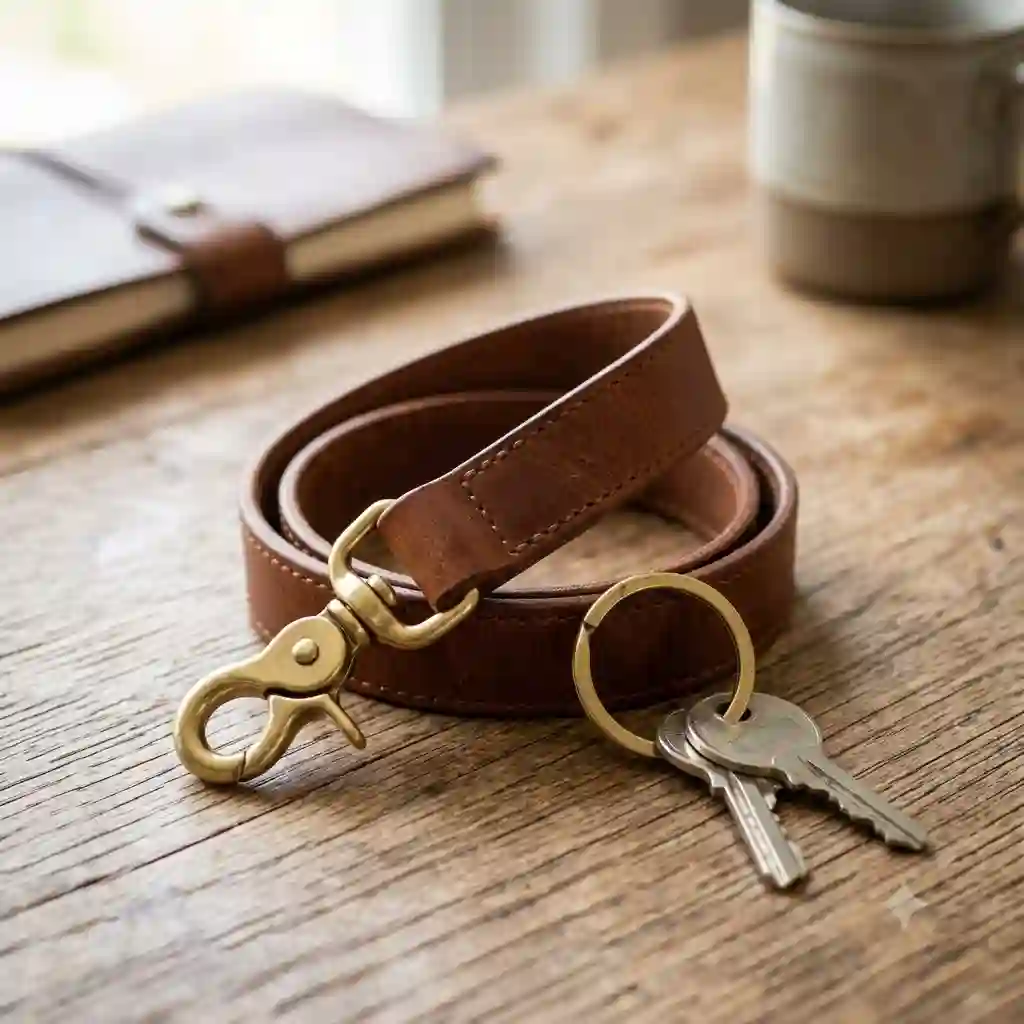
For the better part of a decade, I have obsessively tested, broken, and documented Everyday Carry (EDC) gear. From titanium pry bars to minimalist wallets, the modern carry enthusiast demands perfection. Yet, the one item that continually frustrates most people is their key setup. You likely know the feeling: a bulky, jingling, thigh-stabbing mass of metal that ruins your pockets and scratches your phone screen. Transitioning to a high-quality leather keychain strap is not just an aesthetic upgrade; it is a fundamental shift in daily comfort.
What is a leather keychain strap?
Functionally, a leather keychain strap is an organizational tool designed to consolidate loose keys using a strip or loop of tanned animal hide, often secured with brass, steel, or titanium hardware. Unlike traditional loose rings, these straps silence key jingle, protect surrounding pocket items from scratches, and develop a unique, personalized patina over months of use.
In my field tests over the last several years, I’ve realized that the spec sheets rarely tell the full story. A brand can brag about “genuine leather” all day, but if the edge burnishing is sloppy or the hardware uses cheap zinc alloys, the rig will fall apart within six months. This guide strips away the marketing hype. We are going to look at the top contenders on the market today, breaking down exactly how they perform when exposed to rain, sweat, and the relentless friction of daily pocket wear.
Quick Comparison: Top Daily Drivers
When clients ask me for a recommendation, I first need to know what they actually carry. A minimalist with two house keys requires a vastly different setup than a property manager with twelve keys and a bulky car fob. The table below breaks down the top models based on realistic use cases, not just manufacturer claims.
| Brand & Model | Best Use Case | Leather Source | Hardware Durability | Price Range |
| Orbitkey Leather Organizer | Best for Office/Minimalist | Top-Grain Cowhide | Stainless Steel (High) | Under $50 |
| Bellroy Key Cover Plus | Best for Pocket Protection | Eco-Tanned Leather | Magnetic/Elastic (Med) | $45 – $60 |
| Trayvax Link Lanyard | Best for Rugged/Outdoors | Horween Leather | Stainless/Climbing Carabiner (Extreme) | $35 – $50 |
| Popov Leather Loop | Best for Heritage/Patina | Full-Grain Chromexcel | Solid Brass (High) | Under $30 |
| Saddleback Loop Ring | Best for “Buy It For Life” | Full-Grain + Pigskin | 316 Stainless (Extreme) | Under $25 |
Looking at the comparison above, the Trayvax Link delivers the absolute best value under $50 for outdoor enthusiasts, simply because its climbing-grade hardware justifies the price point if you are hard on your gear. Office workers should note that the Bellroy sacrifices some absolute long-term durability for its incredibly sleek, pocket-saving bifold design. Budget-conscious buyers willing to endure a stiff break-in period will find the Popov Leather option offers the most impressive return on investment in terms of raw material quality.
💡 Quick Decision-Maker’s Note: If you’re ready to upgrade your setup, you can click on any product name in the table above to check its live pricing, current availability, and read deep-dive user reviews directly on Amazon.
[addtoany]
The Top 5 Models Evaluated: Deep-Dive Analysis
1. Orbitkey Leather Key Organizer
When evaluating the Orbitkey Leather Key Organizer, the first thing that stands out is its proprietary locking mechanism. The spec sheet boasts a “stainless steel tension ring,” but in practice, this translates to a system that completely eradicates key jingle while allowing you to dial in the exact friction needed to deploy a single key one-handed. It comfortably holds 2 to 7 standard keys, though I’ve found that adding more than five requires their optional extension post, which can slightly throw off the balance of the unit. The top-grain leather is heavily treated, meaning it repels water and pocket lint effortlessly right out of the box.
From my hands-on experience, this is the definitive choice for the modern professional. What most buyers overlook about this model is how the internal stainless steel band provides rigid structure, preventing the leather from bowing or stretching out of shape over time. However, this same rigid structure means it won’t accommodate uniquely shaped mortise keys or thick, old-school vehicle keys easily. The D-ring attachment for electronic car fobs is functional, but it does leave your fob dangling loosely, which slightly defeats the ultra-compact aesthetic.
Actual community feedback highlights the incredible customer support and the vast ecosystem of add-ons, like their proprietary multi-tool and USB drive inserts. Retailing in the mid-$40 range, it sits firmly in the premium category for its size. Ultimately, if your daily uniform involves tailored trousers or a slim-fit suit, the Orbitkey provides an elegantly silent solution that simply won’t ruin your pocket lines.
2. Bellroy Key Cover Plus
The Bellroy Key Cover Plus takes a radically different approach to key management by employing a magnetic bifold design rather than a tension post. The specifications highlight “premium eco-tanned leather” and “elastic tension,” which means the cover literally wraps around your keys like a tiny wallet, keeping the jagged edges completely isolated from your smartphone or wallet. It claims to hold 4 to 8 keys. The leather is notoriously soft on day one, requiring zero break-in period, and the magnetic closure snaps shut with a satisfying, tactile click that fidgeters will appreciate.
In my field tests, I found this design to be an absolute lifesaver for people who throw their keys and phone into the same bag or pocket. The hidden pros here are the dedicated leather loop for a car fob and the incredibly slim silhouette. However, the spec sheet won’t tell you this, but the elastic shock cord that threads through your keys can stretch out if you frequently force too many oversized keys into the rig. If you stick to 4 standard house keys, it operates flawlessly.
Reviewers consistently praise its elegant appearance, though some mention that the soft leather shows scratches faster than denser full-grain options. Priced in the $45 to $60 range depending on the colorway, it commands a premium. I highly recommend the Bellroy for urban commuters who prioritize protecting their other pocket gear over having a rugged, bomb-proof tactical keychain.
3. Trayvax Link Leather Lanyard
Moving into the tactical and outdoor space, the Trayvax Link Leather Lanyard is an entirely different beast. Featuring a combination of top-tier Horween leather and a custom-machined quick-release carabiner, the specs focus on raw tensile strength. The integration of a climbing-grade carabiner means you can blindly clip this to a belt loop, backpack, or D-ring without ever worrying about a spring failure. The leather itself acts as an extension handle, allowing you to unlock doors without detaching the rig from your belt.
What surprised me most during use was how the Horween leather bridges the gap between rugged utility and refined heritage. Unlike cheap nylon lanyards that fray and look dirty after a month of camping, the Trayvax actually looks better the more you abuse it. The quick-release mechanism is highly secure—perhaps almost too secure during the first week of use before the spring tension slightly breaks in. The primary drawback here is length; it dangles significantly lower than a compact organizer, which might annoy minimalists.
Community feedback is overwhelmingly positive regarding its build quality, with many users stating it outlasts every other item in their EDC rotation. Generally sitting in the $35 to $50 range, the value proposition is astronomically high. If you are an outdoorsman, trades worker, or someone who rides a motorcycle and needs guaranteed retention on your belt, the Trayvax Link is unparalleled.
4. Popov Leather Keychain
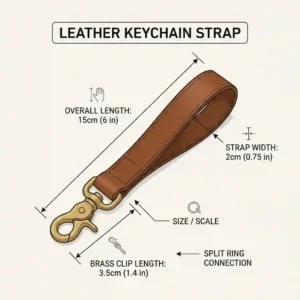
The Popov Leather Keychain represents the purist’s approach to everyday carry. The specifications are brilliantly simple: one thick strip of full-grain Horween Chromexcel leather, secured by a single heavy-duty solid brass rivet and a solid brass split ring. There are no moving parts, no tension springs, and no magnetic closures to fail. The use of Chromexcel means this strap is stuffed with natural oils and waxes during the tanning process, giving it massive self-healing properties when scratched.
My expert opinion on this piece is that it is the ultimate “slow burn” investment. When you first receive it, the thick leather will feel somewhat stiff, and the raw brass hardware will look excessively shiny. Most reviewers claim the stiffness is a negative, but in practice, I found this density to be the real indicator of longevity. Within three months, the brass takes on a cloudy, antique patina, and the leather softens into a supple loop that forms perfectly to your grip. It doesn’t silence keys like the Orbitkey, but it provides a secure, substantial pull-tab for retrieving keys from deep pockets.
Feedback across EDC forums routinely praises Popov for their traditional hand-stitching and edge finishing. Available for under $30, this is an absolute steal for genuine Horween material. It is the ideal choice for heritage wear enthusiasts who appreciate denim, boots, and gear that ages gracefully alongside the user.
5. Saddleback Leather Loop Key Ring
Finally, we have the Saddleback Leather Loop Key Ring, a product born from a company famous for their “100-year warranty.” The specs feature their signature full-grain leather backed with a tough pigskin lining, sewn together with marine-grade polyester thread. The hardware is custom 316 stainless steel, a grade typically reserved for maritime applications because it is virtually impervious to rust and corrosion.
In my experience, Saddleback gear is consistently over-engineered, and their key ring is no exception. Frame this as a practical insight: the pigskin lining (which is highly abrasion-resistant) prevents the inside of the loop from degrading as it rubs against your belt or fingers day in and day out. The 316 stainless steel ring is so thick that you might actually struggle to thread standard, smaller keys onto it without using a tool. It is unapologetically heavy and robust.
User reviews often joke that this keychain will outlive them, and having inspected the marine-grade stitching under a loupe, I tend to agree. Usually priced well under $25, the cost-per-use ratio is practically zero over a lifetime. This is the definitive purchase for the buyer who wants to buy a leather keychain strap exactly once and never think about replacing it again.
🔍 Ready to Upgrade Your Pocket Organization?
Tired of shredded pocket linings and the constant, annoying jingle of loose metal every time you walk? Click on our recommended models above to view current pricing, check available colorways, and find the perfect fit for your daily routine on Amazon.
Practical Usage Guide: Breaking In and Preserving Your Leather
You cannot treat a premium leather keychain strap the way you treat a cheap plastic lanyard. Full-grain and top-grain hides are organic materials; they breathe, absorb moisture, and dry out over time. When you first unbox your new organizer, you are entering the “break-in period.” During the first 14 days, the leather will likely feel stiff, and if you’ve purchased a tension-style organizer, deploying the keys might require extra thumb force.
Do not force the leather by artificially bending or crushing it. The best way to break in your new setup is simply to use it daily. The natural warmth of your pocket and the oils from your hands will naturally soften the fibers. For maintenance, I recommend applying a high-quality leather conditioner (like Venetian Shoe Cream or a beeswax-based balm) every six months. Simply dab a pea-sized amount onto a microfiber cloth, rub it into the leather in circular motions, and let it cure overnight.
If your strap gets soaked in a rainstorm, never dry it with a hairdryer or place it on a radiator. High heat bakes the natural oils out of the hide, causing irreversible cracking. Let it air dry naturally at room temperature, then immediately apply a light coat of conditioner. Maintaining this simple routine ensures the strap maintains its structural integrity while developing a stunning, rich patina.
Real-World Scenarios: Building the Perfect Loadout
Understanding the specifications of a leather keychain strap is helpful, but matching the tool to your specific lifestyle is where the true value lies. Let’s look at three common user profiles and how to optimize their setup.
The Urban Commuter & Office Worker
If your daily routine involves riding the subway, carrying a slim briefcase, and wearing tailored trousers, bulk is your enemy. You likely carry 2 house keys, a desk key, and an electronic building fob. The ideal loadout here utilizes a compact, tension-style organizer. Keep the physical keys tucked away silently inside the leather housing, and use a small, detachable D-ring strictly for the building fob. This prevents the “janitor jingle” as you walk down quiet office hallways and preserves the drape of your clothing.
The Trades Professional & Motorcyclist
For those who wear heavy workwear, gloves, and need immediate access to gear without digging through deep pockets, a tension organizer is often too fiddly. The ideal setup is a heavy-duty leather lanyard with a quick-release carabiner. You want a thick loop that you can easily grab while wearing work gloves. Hooking the carabiner to a sturdy belt loop keeps the keys out of your pockets altogether, preventing them from stabbing you when you bend, crouch, or straddle a motorcycle tank.
The Family Manager
This profile involves chaos: multiple car fobs, house keys, mail keys, and a miniature gym barcode. A single leather keychain strap won’t hold it all efficiently. The solution is a modular approach. Use a durable bifold leather cover to house the essential daily keys (front door, mail), and use a heavy-duty quick-release magnetic hub to attach the bulky, un-housable car fobs. This allows you to detach the car fob when you drop the vehicle off at the mechanic, without handing over the keys to your entire life.
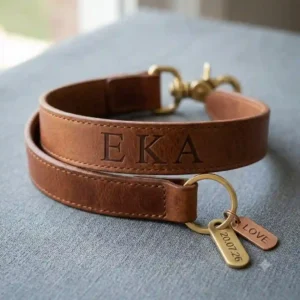
Problem & Solution: Silencing the Jingle and Protecting Your Dash
A major reason people abandon traditional metal rings is the collateral damage they cause. In my consulting, the two most common complaints I hear are “my keys are scratching my phone screen” and “the dangling weight is scratching the plastic on my car’s dashboard/steering column.”
Problem 1: Pocket Collateral Damage
When keys float freely in a pocket alongside a smartphone or a minimalist leather wallet, the jagged teeth of the keys act like saw blades.
The Solution: Transitioning to an enclosure-style leather keychain strap (like a bifold or a tension-bar model). By physically sandwiching the keys between thick layers of leather, you encapsulate the abrasive edges. If you must carry a loose fob, keep the fob on the outside but ensure the jagged metal keys are locked inside the leather housing.
Problem 2: Dashboard Scratches and Ignition Wear
If you drive an older vehicle with a traditional keyed ignition, a massive, heavy wad of keys swinging like a pendulum while driving can slowly destroy the ignition tumbler and scratch the surrounding dashboard trim.
The Solution: Use a leather loop with a detachable quick-release mechanism. When you get into your car, pop the single car key off the rig. The heavy mass of the remaining keys stays in your pocket or cup holder, while only the lightweight, single key sits in the ignition. This saves your dashboard from scratches and extends the life of your car’s mechanical tumbler.
How to Choose a leather keychain strap: A Decision Framework
When staring down dozens of options online, use this expert framework to filter out the marketing noise and find exactly what you need.
-
Count Your Keys Accurately: Lay out everything you currently carry. Separate “essential” keys from “once-a-month” keys. If your essential count is over 6, avoid tension-style organizers, as they become unwieldy.
-
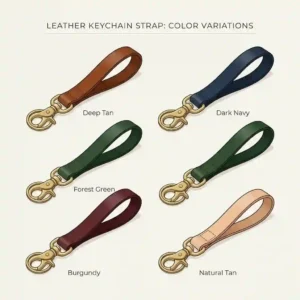
Identify Your Leather Preference: Do you want it to look pristine forever, or do you want it to age? Top-grain leather is usually coated and resists staining, keeping a uniform look. Full-grain leather absorbs oils and scratches, developing a deep, dark patina that tells a story.
-
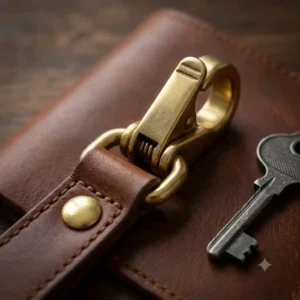
Check the Hardware Metal: Look specifically at the metal composition. Zinc alloys (often listed just as “metal”) are cheap and will snap under pressure. You want specifications that explicitly state “Solid Brass,” “Titanium,” or “304/316 Stainless Steel.”
-
Evaluate the Fob Situation: Modern car fobs are massive. If you have a bulky fob, ensure the leather strap has a dedicated, heavy-duty D-ring or secondary attachment point. Trying to force a thick plastic fob into a sleek leather enclosure will ruin the leather’s stitching.
-
Assess Pocket Orientation: Do you prefer your keys to sit at the bottom of your pocket, or suspended from your belt/pocket edge? Suspension requires a lanyard or a pocket-clip integration, whereas bottom-carry favors sleek, pebble-like organizers.
Common Mistakes When Buying Your First Organizer
Over the years, I’ve seen countless people make the same errors when upgrading their carry. The spec sheet won’t warn you about these pitfalls, but real-world experience makes them painfully obvious.
The most frequent mistake is ignoring the diameter of your keyholes. Many premium organizers use a metal tension post that is approximately 4mm thick. Most standard house keys fit this perfectly. However, older vintage keys, specialized mortise lock keys, or certain padlock keys have much smaller holes. Buyers get the product home, try to assemble it, and find their keys literally don’t fit on the post. Always check your keys before committing to a tension-bar system.
Another massive error is over-tightening the hardware. When folks buy a leather keychain strap that uses a screw post, they want it tight so the keys don’t flop out. They crank down on the screw with a coin or a screwdriver. Two weeks later, the constant rotational friction of deploying the keys acts as a wrench, either unscrewing the post entirely (sending keys flying into a storm drain) or stripping the threads. The solution is simple: apply a tiny drop of blue thread-locker (Loctite) to the screw during assembly. It secures the screw chemically without requiring you to over-tighten the physical hardware.
The Traditional Metal Carabiner vs. Leather Alternatives
How does a leather rig actually stack up against the classic climbing carabiner that so many people use? Let’s break down the data.
| Feature | Traditional Metal Carabiner | Premium Leather Strap/Organizer | Best For… |
| Noise Level | Extremely High (Constant Jingle) | Silent to Very Low | Leather wins for office/stealth |
| Pocket Damage | High (Exposed jagged keys) | Zero (Keys are enclosed/padded) | Leather wins for protecting gear |
| Belt Loop Wear | High (Metal grinds against fabric) | Low (Leather absorbs friction) | Leather wins for clothing longevity |
| Tensile Strength | Extreme (Climbing rated) | Moderate to High | Carabiner wins for heavy loads |
| Aesthetics | Utilitarian / Casual | Professional / Heritage | Leather wins for formal environments |
Looking at the comparison above, the traditional metal carabiner holds the edge purely in raw tensile strength, making it ideal if you are clipping heavy gear to a heavy-duty backpack. However, for everyday pocket or belt carry, the leather alternative massively outperforms metal by virtually eliminating noise and protecting your clothing from abrasive wear. If you frequently wear suits or expensive raw denim, the constant friction of an aluminum carabiner will chew through your belt loops in a matter of months, whereas a leather loop distributes that friction smoothly.
What to Expect: Real-World Patina and Performance Over Time
When you invest in a quality leather keychain strap, you are not buying a static object; you are buying a material that evolves. Amazon listings showcase perfectly lit, pristine products, but that is not what your gear will look like after six months in the trenches.
During the first 30 days, expect the leather to undergo “micro-scratching.” If you purchase full-grain leather, every time your fingernail brushes it or it bumps against a desk, it will leave a light mark. Panic is a common reaction here. Don’t worry. This is the foundation of the patina. The friction of your pocket will naturally buff these scratches out, blending them into a deeper, richer color.
By the six-month mark, a fascinating biological reaction occurs. The tannins in the leather react to UV light (the sun) and the natural oils from your skin. A light brown strap will darken into a rich mahogany. The edges, if properly burnished with beeswax by the manufacturer, will become slick and glassy. Hardware also transforms. Solid brass will lose its gold-like luster, oxidizing into a muted, matte bronze. This aging process is highly sought after in the EDC community because it means your carry piece has become uniquely mapped to your specific body chemistry and daily habits.
Features That Actually Matter (And What to Ignore)
Marketing departments love to invent proprietary names for simple features. To avoid overpaying, you must know what actually drives performance.
Ignore “Genuine Leather” Claims:
In the leather industry grading scale, “genuine leather” is essentially the lowest usable tier. It is often made from split layers that are heavily painted and coated in plastic to simulate a grain. It will crack and peel within a year. You want terms like “Full-Grain” (the strongest, outermost layer of the hide) or “Top-Grain” (sanded smooth but still highly durable). According to industry definitions on Wikipedia, full-grain leathers retain the complete natural fiber structure, offering vastly superior tear resistance.
Prioritize Edge Finishing:
Look closely at the edges of the strap in the product photos. Are they fuzzy and raw, or are they smooth and glossy? Quality makers spend significant time “burnishing” the edges—rubbing them with canvas and beeswax until they are sealed. Unburnished edges will absorb sweat, fray, and eventually separate. This single feature is a massive indicator of overall quality and lifespan.
Demand Solid Hardware:
If a brand advertises “premium metal hardware” without specifying the exact alloy, run. It is almost certainly zinc alloy (pot metal) coated in a thin layer of chrome. Zinc is brittle and snaps under torsion. You explicitly want solid brass, stainless steel, or titanium. These metals bend before they break, ensuring a catastrophic failure won’t send your keys flying while you’re riding a bicycle or hiking.
Long-Term Cost & The ROI of Quality Materials
Let’s discuss total cost of ownership. It is easy to go into a big-box store and buy a synthetic nylon or cheap bonded leather keychain for $5. You will likely replace that $5 item every 8 to 10 months as the stitching blows out or the cheap spring breaks. Over five years, you have spent $30 on broken gear, experienced the frustration of dropped keys, and sent multiple pieces of plastic to a landfill.
Conversely, a premium leather keychain strap utilizing Horween Chromexcel and solid brass will cost you around $35 to $50 upfront. Assuming you spend $5 on a tin of leather conditioner that will last you ten years, your total five-year cost is $40 to $55. The financial cost is roughly similar, but the return on investment is drastically different.
The premium option gets better, softer, and more reliable with age. It prevents you from having to replace a $200 smartphone screen scratched by loose keys. It stops the premature wear on your $80 pants pockets. When you factor in the “Efficiency Gap”—the daily time and frustration saved by having a silent, organized key system—the upfront premium pays for itself within the first month of use. Environmental analyses from leading agricultural university studies consistently show that utilizing long-lasting, vegetable-tanned full-grain leathers dramatically reduces consumer waste compared to cyclic purchasing of petroleum-based synthetic alternatives.
Hardware Safety & Compliance Guide
While it may seem overly cautious, understanding the materials in your everyday carry is crucial for long-term health, especially if you have children who might handle or chew on your keys.
Many ultra-cheap, unbranded organizers imported from overseas use brass that is heavily alloyed with lead to make it easier to machine. According to guidelines set by the US Consumer Product Safety Commission, prolonged exposure to lead—even through dermal contact—is highly discouraged. When you buy from reputable, transparent brands that specify their material sourcing (like utilizing marine-grade 316 stainless steel or lead-free architectural brass), you are mitigating these subtle environmental risks.
Furthermore, if you work in an industrial, electrical, or automotive environment, be aware of the conductivity of your carry. Large metal organizers can act as a bridge for electrical currents or get dangerously hot if left resting near engine components. A robust leather loop acts as a natural insulator, providing a safer grip in extreme temperature environments or near live electrical panels.
Final Thoughts on Refining Your Pocket Carry
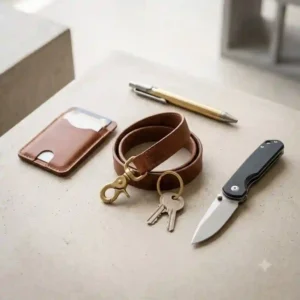
Transitioning to a dedicated leather keychain strap is often the final puzzle piece in perfecting your everyday carry. We spend massive amounts of time researching our phones, our wallets, and our watches, yet we allow the items that unlock our homes and vehicles to remain a chaotic, noisy mess.
Whether you opt for the sleek, silent profile of a tension organizer for the office, or the rugged, buy-it-for-life durability of a full-grain brass-riveted loop for the outdoors, the upgrade will immediately change how you move through your day. You will stop sounding like a janitor walking down the hallway. Your phone screen will thank you, your pockets will last longer, and you will gain a functional piece of art that ages beautifully alongside you. Take the time to evaluate what you actually carry, choose the right hardware, and enjoy the silence.
FAQs
❓ What is the best way to clean a leather keychain strap?
✅ Wipe it down with a slightly damp, lint-free cloth to remove surface dirt. Never use harsh chemical soaps, alcohol, or hand sanitizer, as they will strip the natural oils. Let it air dry, then apply a dedicated leather conditioner…
❓ Will a leather organizer fit my car key fob?
✅ Most enclosed organizers cannot fit modern, bulky electronic car fobs internally. However, premium models include a heavy-duty external D-ring or secondary loop specifically designed to let your fob hang securely outside the main leather body…
❓ How long does it take for full grain leather to break in?
✅ Typically 2 to 4 weeks of daily use. The warmth from your pocket, natural hand oils, and constant flexing will soften the stiff fibers. Applying a tiny amount of leather balm can safely accelerate this process…
❓ Does a leather keychain strap stop all key jingle?
✅ Tension-bar designs (like Orbitkey) or bifold enclosures will eliminate about 95% of key noise. Traditional leather loop lanyards will not silence your keys, but they provide a better grip and keep them from tangling…
❓ What happens if my leather gets completely soaked in water?
✅ Do not panic. Remove the keys, pat the leather completely dry with a towel, and let it sit at room temperature away from direct sunlight or heaters. Once fully dry, massage a generous coat of leather conditioner into it…
Recommended for You
- 5 Best Custom Engraved Keychains in 2026: A Buyer’s Expert Guide
- 5 Best Leather Keychain Holder Options for Your EDC in 2026
- 5 Best Leather Key Ring Options for EDC in 2026: An Expert Review
Disclaimer: This article contains affiliate links. As an Amazon Associate, I earn from qualifying purchases. If you purchase products through these links, we may earn a small commission at no additional cost to you.
✨ Found this guide helpful? Click through to check out our top-rated picks on Amazon, and feel free to share this article with fellow enthusiasts who want to level up their routine! 💬🤗
[addtoany]
