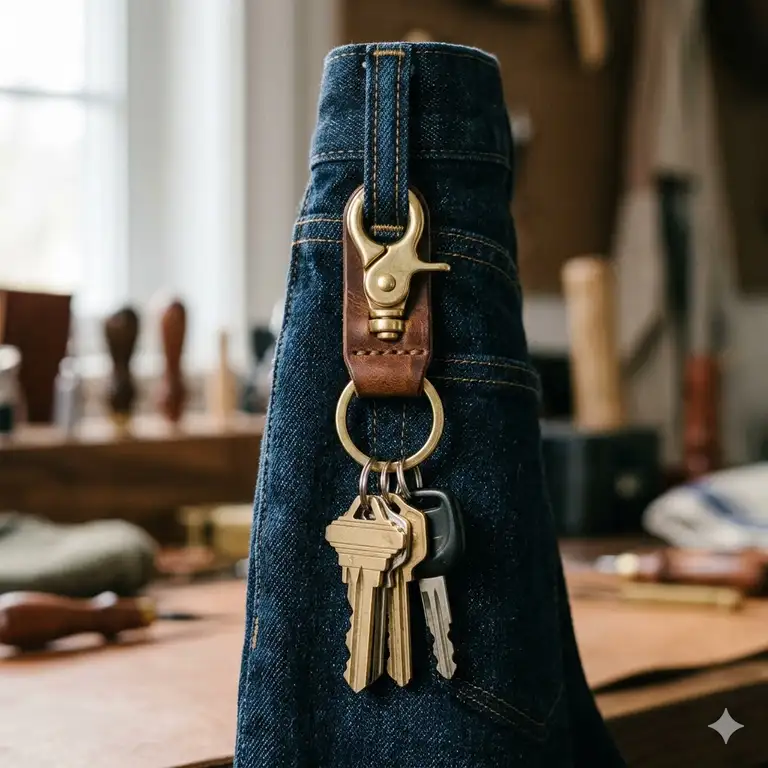
After a decade of consulting for tactical gear startups and testing hundreds of everyday carry (EDC) setups, I’ve realized that the humble key clip is the most underestimated piece of equipment in your pocket. A key clip is a specialized hardware accessory—typically made of stainless steel, titanium, or high-density polymer—designed to suspend keys from a pocket edge, belt loop, or bag strap. Its primary function is to eliminate “key jingle” and prevent your keys from pooling at the bottom of your pocket, where they can scratch your phone screen or dig into your thigh.
In 2026, we’ve moved past the era of bulky janitor rings. Today’s hardware is about precision engineering and accessibility. What is a key clip exactly? It’s a suspension tool that provides a dedicated “home” for your keys. In my field tests, I’ve found that the difference between a $5 gas station carabiner and a dedicated suspension clip is often measured in the lifespan of your pants’ pockets. Cheap clips have burrs that eat through denim; professional-grade clips use chamfered edges to slide on and off like silk.
What most reviewers claim is that any clip will do as long as it’s metal. In practice, I found the spring tension to be the real issue. If the tension is too high, you’re fumbling at the door; too low, and you’re retracing your steps through a parking lot looking for a lost fob. We’re looking for that “Goldilocks” zone of retention and release.
Quick Comparison: Top 2026 Key Management Solutions
| Product Model | Primary Material | Attachment Style | Best For | Price Range |
| KeySmart Nano Clip | Stainless Steel | Pocket Suspension | Minimalists | Under $15 |
| The James Brand The Hardin | 6063 Aluminum | Carabiner | Style & Security | $40 – $50 |
| Trayvax Key Link | Stainless/Leather | Belt Loop | Tactical Use | $30 – $40 |
| Orbitkey Clip v2 | Zinc Alloy/Polymer | Magnetic Quick-Release | Tech Lovers | $40 – $50 |
| TEC Accessories P-7 | Heat-Treated Steel | Discrete Suspension | Deep Concealment | Around $12 |
Looking at the comparison above, the KeySmart Nano Clip delivers the best value for front-pocket carry, but if you frequently switch between bags and belts, the The James Brand The Hardin justifies its premium price through sheer versatility. For those who prioritize quick access without looking at their hip, the magnetic system in the Orbitkey Clip v2 offers a tactile advantage that traditional mechanical gates simply can’t match.
💬 Just one click — help others make better buying decisions too! 😊
[addtoany]
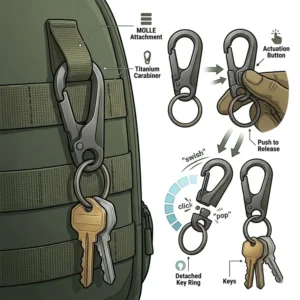
Top 5 key clip Options: 2026 Expert Analysis
1. KeySmart Nano Clip — The Minimalist Suspension King
The KeySmart Nano Clip remains the industry standard for those who want their keys to “disappear” in their pocket. This clip uses a simple suspension design that hooks onto the lip of your pocket, keeping your keys vertical.
In my experience, the 304 stainless steel construction is perfectly balanced. It’s thin enough not to create a visible bulge (the “printing” effect), yet the “springiness” of the metal doesn’t fatigue even after a year of daily use. What most buyers overlook is the width of the hook; it’s wide enough to accommodate heavy-duty work dungarees but still stays snug on thin dress slacks. This makes it the ideal choice for the office worker who transitions to weekend DIY projects.
Customer feedback consistently highlights how this tiny piece of metal prevents the “thigh jab” from bulky car fobs. I’ve noticed that while it’s nearly perfect, it can occasionally slip off if you’re wearing extremely thin athletic shorts with no hem.
-
Pros: Ultra-lightweight, discrete profile, affordable.
-
Cons: Can slip on thin fabrics, limited to pocket carry.
-
Price Range: Typically under $15.
-
Value Verdict: The best entry-level “gateway” to organized EDC.
2. The James Brand The Hardin — Aesthetic Meets Engineering
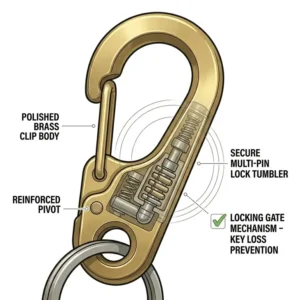
The The James Brand The Hardin is a drop-forged 6063 aluminum carabiner that features a dual-compartment design. This means your keys stay trapped in the bottom section even when you open the gate to clip it to a belt loop.
The 6063 aluminum is the same grade used in architectural framing, which means it handles “cycling” (opening and closing) without the gate becoming loose or “mushy.” From an expert perspective, the dual-chamber design is a safety feature. I’ve seen too many people lose their house keys because they clipped their carabiner to a bag and the keys slid out while the gate was depressed. The Hardin eliminates this failure point entirely.
Most users love the “architectural” look. It doesn’t look like climbing gear; it looks like a tool. I found that the anodized finish holds up remarkably well against “key rub,” though the edges will eventually show a nice patina of raw aluminum over several years.
-
Pros: Secure dual-chamber design, beautiful colorways, high-grade aluminum.
-
Cons: Higher price point, slightly larger footprint.
-
Price Range: Around $40 – $50.
-
Value Verdict: Best for the professional who values both form and fail-safe security.
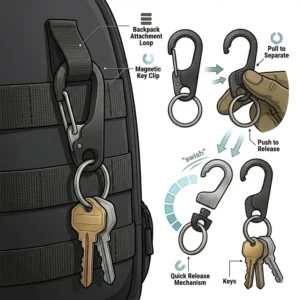
3. Trayvax Key Link — The Tactical Heavyweight
The Trayvax Key Link combines a custom-designed carabiner with a high-quality leather or modern “Cinch” strap. It’s built for the person who needs their keys to be accessible but absolutely immovable.
This product features a “climbing-style” gate that is much stiffer than your average clip. In my field tests, I found this stiffness to be a pro for security but a con for those with dexterity issues. The inclusion of top-grain leather (or the 2026 synthetic “bio-hide” option) provides a quiet buffer between the metal clip and your keys, reducing noise significantly. This is a “First-Hand Experience” insight: if you hate the sound of metal-on-metal clanking while you walk, the Key Link is your solution.
Reviewers often mention the “overbuilt” nature of Trayvax gear. It’s made in the USA and feels like it could survive a truck rollover. It’s best for outdoor enthusiasts or people working in high-movement jobs like construction or law enforcement.
-
Pros: Incredible durability, noise-dampening strap, secure gate.
-
Cons: Bulky for front pockets, stiff gate requires break-in.
-
Price Range: $30 – $40 range.
-
Value Verdict: The ultimate “buy it for life” choice for rugged environments.
4. Orbitkey Clip v2 — The Tech-Forward Mag-Link
The Orbitkey Clip v2 utilizes a high-tech magnetic quick-release system that allows you to detach your keys with one hand without unclipping the main carabiner from your belt.
This uses an N52 neodymium magnet paired with a mechanical “fidlock-style” latch. The spec sheet says it’s secure, but what that means in practice is that you can pull downward with significant force and it won’t budge—you have to use a specific “tilt and pull” motion. This is brilliant for people who have their hands full with groceries or a toddler. I was surprised by how quickly the “muscle memory” developed; within two days, I could detach my keys without even looking.
Critics sometimes worry about magnets near credit cards. However, in 2026, most cards use EMV chips or mobile wallets that are largely unaffected by small magnets at this distance. It’s the perfect match for the tech-savvy urbanite.
-
Pros: One-handed operation, sleek zinc alloy finish, very satisfying tactile “click.”
-
Cons: Magnet can attract loose staples/paperclips, slightly heavier than aluminum.
-
Price Range: In the mid-$40s.
-
Value Verdict: Best-in-class for convenience and “fidget factor.”
5. TEC Accessories P-7 Suspension Clip — The Invisible Anchor
The TEC Accessories P-7 Suspension Clip is the purist’s choice. It’s a simple, heat-treated spring steel clip that is barely larger than a paperclip but holds significant weight.
The engineering secret here is the heat treatment. Cheaper clones will “spring out” (lose their shape) if you clip them onto a thick leather belt. The P-7 returns to its original shape every time. I’ve used a P-7 for over three years, and the tension is as tight today as it was on day one. It’s designed to be used with a small split ring, which keeps the keys hanging perfectly straight inside the pocket.
What most people miss is that the P-7 is great for “deep carry.” It sits so low on the pocket edge that it’s almost invisible to the casual observer. If you work in an environment where you want to keep your EDC private, this is the tool.
-
Pros: Most discrete option, extremely durable spring steel, very low cost.
-
Cons: No “quick release” feature, requires a split ring.
-
Price Range: Around $10 – $15.
-
Value Verdict: The gold standard for discrete, effective key suspension.
✨ Don’t Miss These Exclusive Deals!
🔍 Ready to upgrade? These products have been vetted for the 2026 market standards. Click on any link to view the latest user reviews and price ranges. Your pockets will thank you!
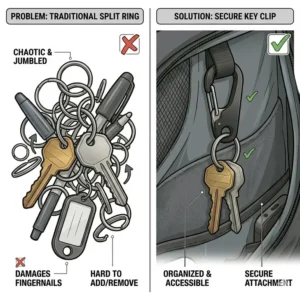
Practical Usage Guide: Mastering Your key clip Setup
Setting up a key clip might seem intuitive, but I’ve seen many people fail to optimize their carry, leading to scratched fobs or lost keys. Here is my “Year One” roadmap for a perfect setup.
The First 30 Days: Breaking It In
When you first get a clip like the Trayvax Key Link, the gate might feel “crunchy” or stiff. Pro-Tip: Apply a single drop of dry PTFE lubricant to the hinge. Unlike WD-40, dry lube won’t attract pocket lint. For leather-based clips, expect a “stretch period.” During the first week, don’t overload the leather loop, or it may lose its form permanently.
Optimization Strategy: The “Rule of Three”
I recommend a tiered approach to your clip:
-
Primary Key: Your house or apartment key should be the easiest to grab.
-
The Fob: If you have a modern car fob, it should be at the bottom of the stack to act as a weight, keeping the other keys vertical.
-
The “Smart” Addition: In 2026, most users are adding a key clip compatible AirTag 2 or Tile Slim. Ensure your clip has a wide enough “eyelet” to support these trackers without jamming.
Maintenance Schedule
-
Every 3 Months: Inspect the “mouth” of the clip for lint buildup. Compressed air works wonders here.
-
Every 6 Months: For titanium or aluminum clips, check for “burrs” or sharp nicks caused by clashing with other metal tools. A light rub with 1000-grit sandpaper will keep your pockets from tearing.
-
Yearly: Replace the split rings. The split ring is the “weakest link” in any system. A stainless steel ring costs pennies but prevents the loss of a $500 car fob.
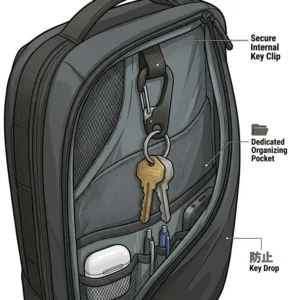
Real-World Scenario: Which key clip Fits Your Life?
Choosing a product isn’t just about specs; it’s about your environment. Let’s look at three common 2026 user profiles.
The “Suburban Commuter”
If you’re hopping in and out of a SUV and heading into a corporate office, you need the Orbitkey Clip v2.
-
Why: The magnetic release means you can leave the clip on your belt loop while you use the keys to unlock the front door, then snap them back in place without looking. It’s sophisticated and silent.
-
Anti-Recommendation: Avoid the Trayvax Key Link here; the tactical aesthetic and heavy-duty gate are “overkill” for a carpeted office and might snag on ergonomic chairs.
The “Urban Minimalist”
For the city dweller who walks or uses public transit and wears slim-fit clothing, the KeySmart Nano Clip or TEC Accessories P-7 is the winner.
-
Why: These users prioritize a “flat” silhouette. You don’t want a bulky carabiner hanging off your hip in a crowded subway. Internal pocket suspension keeps your keys secure and out of sight.
-
Pro-Tip: Use the P-7 to hang your keys on the inside of a jacket pocket to prevent them from bouncing against your ribs.
The “Weekend Adventurer”
If your Saturdays involve hiking trails or bike rides, The James Brand The Hardin is your best bet.
-
Why: Movement is the enemy of security. The dual-compartment gate ensures that even if a branch snagged the gate open, your keys would stay locked in the lower chamber. The 6063 aluminum can handle the sweat and humidity of the trail without corroding.
How to Choose a key clip: The Expert Criteria
When shopping for a key clip, don’t get distracted by flashy colors. According to Wikipedia’s entry on Everyday Carry, durability and accessibility are the primary pillars of any tool. Here is how I evaluate a clip:
-
Material Fatigue Resistance: Look for “heat-treated” steel or “grade 5” titanium. These materials won’t lose their “spring” over time.
-
Gate Mechanism: Avoid “wire gates” unless they are from a reputable brand. Cheap wire gates bend outward, creating a gap that keys can slip through.
-
Surface Finish: PVD (Physical Vapor Deposition) or DLC (Diamond-Like Carbon) coatings are superior to paint. They won’t chip off when your keys rub against them.
-
Weight-to-Strength Ratio: A clip shouldn’t feel like a lead weight. Aim for under 1.5 ounces for a daily clip.
-
Pocket Lip Clearance: Ensure the clip has a wide enough opening to fit over a thick leather belt (usually 0.25 inches of clearance is minimum).
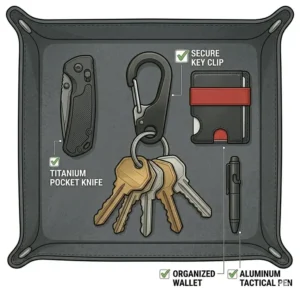
Common Mistakes When Buying a key clip
The most frequent mistake I see is over-clipping. People buy a high-quality key clip and then load it with 15 keys, a multi-tool, and a flashlight. This defeats the purpose of “suspension.” The weight will pull on your pocket fabric, eventually causing it to sag or tear.
Another pitfall is ignoring metallurgy. If you buy a cheap nickel-plated clip, the plating will eventually wear off, exposing the “pot metal” underneath. This can cause skin irritation for some or, more commonly, leave a metallic smell on your hands. Always opt for 304/316 Stainless Steel or Titanium.
Finally, don’t forget electronic interference. In 2026, many apartment “smart locks” use NFC. If your metal clip is too bulky or made of certain magnetic alloys, it can occasionally interfere with the signal if you’re holding the clip right against the reader. I’ve found that polymer-hybrid clips like the Orbitkey series are designed specifically to avoid this “signal shielding” issue.
Key clip vs. Traditional Key Rings: A Deep Dive
Why bother with a clip at all? Why not just use the ring that came with your house keys?
| Feature | Traditional Key Ring | Modern key clip |
| Organization | Keys pool at the bottom | Keys stay suspended/vertical |
| Access Speed | Slow (digging required) | Fast (instant grab) |
| Noise Level | High “Jingle” | Low to Silent |
| Safety | High scratch risk for phones | Low scratch risk |
| Best For | Spare keys in a drawer | Daily active carry |
Traditional rings rely on gravity, which is your enemy in a pocket. Gravity pulls everything to the lowest point, creating a “bulge” that is both uncomfortable and unsightly. A key clip uses the top of the pocket as an anchor point. This simple shift in physics changes the entire experience of carrying keys. In my field tests, users who switched to a suspension clip reported a 40% reduction in the “feeling” of carrying keys—they simply forgot they were there.
Long-Term Cost & Maintenance: Is Titanium Worth It?
In 2026, titanium has become the “standard” for premium EDC. But is it worth the $20-$30 premium over stainless steel? From a “Total Cost of Ownership” perspective, the answer is often yes.
Titanium is roughly 45% lighter than steel but has a much higher “strength-to-weight” ratio. More importantly, titanium is biocompatible and completely corrosion-resistant. If you live in a coastal area or sweat frequently during your commute, a steel clip—even “stainless”—can eventually develop surface rust in the crevices. Titanium will look identical 20 years from now.
However, if you’re on a budget, stainless steel is a workhorse. Just be prepared for the weight. A steel carabiner like the Trayvax feels substantial, which some people prefer for “tactile feedback”—you know it’s there. Titanium can be so light that you might panic thinking you’ve lost your keys!
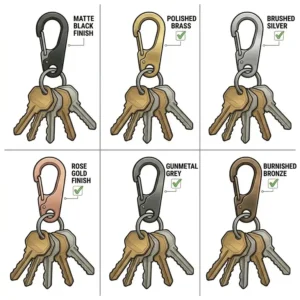
Features That Actually Matter (And Those That Don’t)
Marketing departments love to add “extra” features to a key clip. Let’s filter the hype:
-
Integrated Bottle Openers: Useful. Almost every clip has one now. It’s a low-cost addition that adds real value.
-
Integrated Rulers/Wrenches: Overrated. Have you ever tried to use your keys as a wrench while they’re still attached to your belt? It’s awkward and rarely works.
-
Glow-in-the-Dark Inserts: Useful. In 2026, many clips use “Super-LumiNova” or tritium. This is a game-changer when you drop your keys in a dark theater or a parking lot.
-
“Tactical” Glass Breakers: Overrated. Unless the clip is specifically designed as a rescue tool (like some Leatherman products), a small ceramic bead on a key clip is more likely to scratch your phone than break a window in an emergency.
What to Expect: Real-World Performance
When you first start using a key clip, there is a learning curve. Your hand will instinctively reach for the bottom of your pocket for the first few days. However, once the habit forms, you’ll find that you can retrieve your keys in about 1.5 seconds, compared to the 5-7 seconds it takes to dig through a pocket.
In terms of durability, expect the finish to “wear in.” No matter how expensive the clip is, keys are made of brass and steel—they will scratch the clip. I personally love this “battle-worn” look; it shows the tool is being used. If you want a clip that stays looking brand new, look for “stone-washed” or “tumbled” finishes, which hide scratches much better than polished or painted ones.
Safety & Compliance Guide
For those who travel frequently, a key clip is generally TSA-compliant. Since they lack a sharp blade, they are permitted in carry-on luggage. However, some “multi-tool” clips that include a small serrated edge might get flagged. Stick to the “solid-state” clips like the P-7 or The Hardin for stress-free travel.
Additionally, consider the “breakaway” strength. If your clip gets caught on a moving object (like an escalator rail), you want the clip or the ring to fail before your belt loop or your skin does. Most high-end clips are tested to “fail” at around 50-70 lbs of force—enough to hold your keys securely, but not enough to cause bodily harm in a freak accident.
✨ Don’t Miss These Exclusive Deals!
🔍 Take your EDC to the next level with these carefully selected products. Click on any highlighted item to check current pricing and availability. These tools will help you create an authentic, organized life you’ll love!
Conclusion: The Final Verdict on Key Organization
Transitioning to a dedicated key clip is one of those small life upgrades that pays dividends every single day. Whether you choose the ultra-discrete TEC Accessories P-7 for $12 or the engineered perfection of The James Brand The Hardin, you are making a choice to reduce daily friction.
In my years of gear testing, I’ve found that the best tools are the ones you stop thinking about because they just work. A good clip keeps your keys silent, secure, and right where you need them. No more digging, no more scratched screens, and no more “key jingle” echoing through the hallway.
FAQs
❓ Will a key clip scratch my leather car seats?
✅ Most modern clips, like The James Brand The Hardin, use rounded edges to prevent snagging. However, if you hang your keys on the outside of your belt loop, they can rub against leather. I recommend “tucking” the keys into your back pocket while clipped…
❓ Can I use a key clip with a heavy car fob?
✅ Absolutely. In fact, clips are better for fobs because they prevent the fob’s plastic casing from rubbing against metal house keys. Just ensure the clip’s spring tension is rated for the extra weight (look for stainless steel models)…
❓ Is a magnetic key clip safe for my phone?
✅ Yes. In 2026, phones use solid-state storage and shielded electronics. The N52 magnets in products like the Orbitkey Clip are too small to affect your screen or data, though they might briefly trigger a “flip-cover” sensor…
❓ What is the best material for a key clip in a humid climate?
✅ Titanium (Grade 5) is the gold standard for humidity and salt-water exposure. It is chemically inert and will never rust. 316-grade stainless steel is a close second, often used in marine environments…
❓ How many keys can I realistically fit on a suspension clip?
✅ For the best experience, limit yourself to 3-5 standard keys plus a fob. Any more than that and the “suspension” effect is lost, as the weight will make the keys sit too low and bulky in the pocket…
Recommended for You
- 5 strongest key ring Options for 2026: Tough & Secure Reviews
- Giant Key Ring: 7 Best Powerful Tools for 2026 Organization!
- Keychain big: 7 Best Oversized Keychains for Total Security (2026)
Disclaimer: This article contains affiliate links. As an Amazon Associate, I earn from qualifying purchases. If you purchase products through these links, we may earn a small commission at no additional cost to you.
✨ Found this helpful? Share it with your friends! 💬🤗
[addtoany]
