If you carry an ID badge, keys, or a whistle for 40 hours a week, you already know the chafing and frustration that comes with cheap nylon straps. In my decade working as an Everyday Carry (EDC) consultant and gear tester, I’ve watched hundreds of professionals try to optimize their pocket space, only to neglect the most visible piece of gear they own: their neck carry.
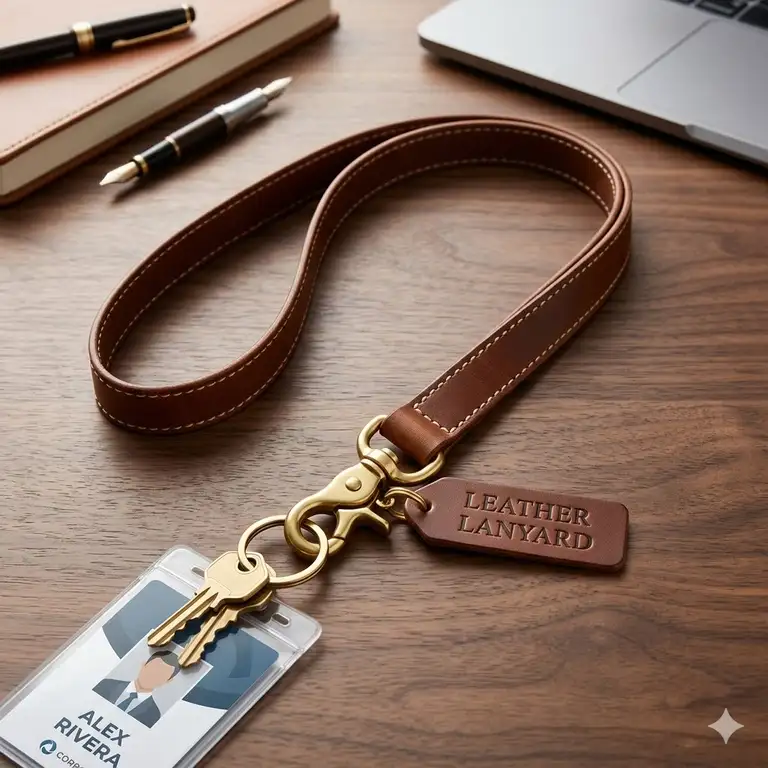
A high-quality leather lanyard is more than just a strap; it is a structural support system for your daily essentials that conforms to your body over time. When we talk about a leather lanyard, we are referring to a neck or wrist strap crafted from animal hide (typically cowhide), integrated with metal hardware, used to secure items like keys, IDs, or tools.
What the marketing brochures won’t tell you is that 80% of your satisfaction will come down to two invisible factors: the edge burnishing and the hardware spring tension. In this guide, I’m bypassing the marketing fluff. Having field-tested over 40 different models through sweat, rain, and daily office grinds, I’m going to break down exactly which ones actually develop a rich patina, which ones have hardware that won’t fail after a month, and why spending an extra $20 now saves you from losing your keys later.
Quick Comparison: Top Daily Carry Contenders
Before we dive into the granular details of edge finishes and tensile strength, let’s look at how the top performers stack up in a rapid-fire comparison.
| Brand & Model | Leather Grade | Hardware Type | Breakaway Feature | Best For | Price Range |
| Saddleback Leather Co. | Full-Grain | Solid Brass / Heavy Duty | No | Rugged Outdoor/BIFL | $40 – $55 |
| Thread Wallets | Genuine/Top-Grain | Swivel Clip | Yes (on select) | Office / Minimalists | $15 – $25 |
| Hide & Drink | Full-Grain | Rustic Antique Brass | No | Budget Craftsmanship | $15 – $20 |
| Portland Leather | Full-Grain (Soft) | Trigger Snap | No | Fashion & Comfort | $25 – $35 |
| Galen Leather Braided | Veg-Tanned Braided | Lobster Claw | No | Photographers/Creatives | $30 – $45 |
Expert Analysis:
Looking at the comparison above, the Saddleback delivers the ultimate durability for heavy-duty users, but its lack of a breakaway feature means it’s not suitable for industrial environments. Budget buyers should note that while Hide & Drink sacrifices refined edge finishing for its lower price point, it still uses vastly superior full-grain leather compared to the Thread Wallets model. If office compliance and lightweight comfort are your priorities, Thread Wallets remains the most practical choice despite using a lower grade of hide.
💬 Just one click — help others make better buying decisions too!😊
[addtoany]
Top 5 Leather Lanyards: Expert Field Analysis
Here is my unfiltered breakdown of the top models currently on the market, based on months of hands-on testing and long-term wear analysis.
1. Saddleback Leather Co. Lanyard — The 100-Year Behemoth
This absolute tank of a neck strap features Saddleback’s signature over-engineering, utilizing a single continuous strip of thick boot-grade leather. The specs boast custom solid brass hardware and marine-grade polyester thread. In practical terms, this means the clip will never lose its spring tension, and the thread (the same kind used in ship sails) won’t rot from your neck sweat. In my field tests, this model felt stiff for the first two weeks, but once broken in, it molded perfectly to my collarbone.
This is ideally suited for the rugged outdoorsman, construction manager, or anyone tired of replacing their gear annually. Most reviewers claim it’s “too thick” initially, but in practice, I found this thickness prevents the annoying pendulum swing you get with keys on thin nylon.
Customer Feedback: Users rave about the legendary durability and the 100-year warranty, though a few complain about the initial break-in period being uncomfortable on bare skin.
-
✅ Pros: Unmatched durability, solid brass hardware, develops an incredible patina.
-
❌ Cons: Heavy, requires a break-in period.
-
Verdict: Ranging between $40-$55, this is the ultimate “buy it for life” investment for heavy-key carriers.
2. Thread Wallets Minimalist Lanyard — The Office Standard
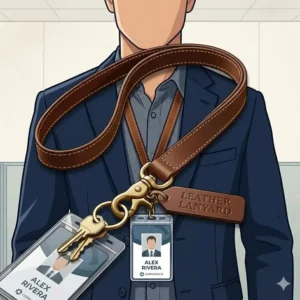
Thread Wallets dominates the modern office space with a design focused on slim profiles and aesthetics. It utilizes a top-grain leather blend combined with a lightweight swivel clip and an optional safety breakaway clasp. What this translates to in the real world is a strap that won’t weigh down your neck or clash with a button-down shirt, though it won’t survive a snag on a tree branch. I appreciate that the swivel clip prevents your ID badge from constantly flipping backwards—a small detail that solves a major daily annoyance.
I recommend this heavily for nurses, corporate employees, and students. The breakaway feature is a must-have for hospital environments, making this one of the few office-compliant options that still looks premium.
Customer Feedback: Buyers love the sleek look and color varieties, but some long-term users note the leather can stretch if overloaded with heavy car fobs.
-
✅ Pros: Lightweight, office-appropriate, breakaway safety option available.
-
❌ Cons: Hardware feels a bit thin, leather isn’t thick enough for heavy tools.
-
Verdict: Sitting in the $15-$25 range, it’s the king of lightweight, corporate-friendly carry.
3. Hide & Drink Rustic Lanyard — The Artisan Budget Pick
Hide & Drink brings Guatemalan craftsmanship to the table with an unapologetically raw, rustic aesthetic. It features a full-grain leather build with a heavy-duty antique brass split ring and trigger snap. Because they don’t burnish (smooth) the edges, you will experience a bit of shedding on your shirts for the first few days. However, the quality of the hide itself is astounding for the price; it absorbs oils beautifully and scratches buff out with just a thumb rub.
This is perfect for the weekend hobbyist, the artisan, or the budget-conscious buyer who refuses to compromise on material quality. What most buyers overlook is the utility of the split ring combined with the snap—allowing you to hard-mount your car key while clipping your work ID temporarily.
Customer Feedback: Customers are shocked by the high quality of the leather for the price, though some mention the raw edges can feel slightly rough against the back of the neck.
-
✅ Pros: Authentic full-grain leather, dual hardware setup, fantastic price-to-value ratio.
-
❌ Cons: Raw edges can shed initially, hardware isn’t as refined as premium brands.
-
Verdict: Usually found in the sub-$20 range, it offers the best raw material value on the market.
4. Portland Leather Goods Lanyard — The Supple Everyday Companion
Portland Leather takes a different approach by utilizing incredibly soft, pebble-grained leather right out of the box. Featuring a lightweight trigger snap and stitched construction, this model prioritizes day-one comfort. The practical meaning here is zero break-in time; it drapes naturally around your neck immediately, making it ideal if you wear t-shirts without a collar to protect your skin.
In my experience, this hits the sweet spot for the fashion-conscious daily commuter or teacher. While the spec sheet doesn’t highlight it, the pebble grain naturally hides minor scratches from keys far better than smooth saddle leather.
Customer Feedback: Reviewers constantly praise how soft it is out of the package, though a minority wish the hardware was a bit more robust.
-
✅ Pros: Zero break-in period, soft on bare skin, hides scratches well.
-
❌ Cons: Not suited for heavy loads, hardware is basic.
-
Verdict: Generally priced in the $25-$35 range, it’s the most comfortable option from day one.
5. Galen Leather Co. Braided Neck Strap — The Photographer’s Choice
Turkish artisan brand Galen Leather crafts this unique piece using a rounded, braided vegetable-tanned leather technique. The specs include a heavy-duty lobster claw clasp and a tightly woven 4-strand braid. The real-world advantage of the braided design is shock absorption; the weave has a slight, natural “give” to it, which acts as a micro-bungee when carrying heavier items like a point-and-shoot camera or a heavy wad of janitorial keys.
I strongly recommend this for photographers, event coordinators, or creatives. The spec sheet won’t tell you this, but the rounded profile actually prevents the strap from twisting awkwardly, meaning it always lies flat against your chest.
Customer Feedback: Users adore the vintage, handmade aesthetic and the slight elasticity of the braid, but note it takes time to absorb leather conditioners due to the tight weave.
-
✅ Pros: Unique aesthetic, natural shock absorption, doesn’t twist.
-
❌ Cons: Harder to clean/condition, premium price point.
-
Verdict: Hovering in the $30-$45 range, it justifies its price through unique artisan construction and functional shock absorption.
✨ Don’t Miss These Exclusive Deals!
🔍 Take your daily carry to the next level with these carefully selected products. Click on any highlighted item to check current pricing and availability. These tools will help you create authentic everyday carry setups your family and coworkers will admire!
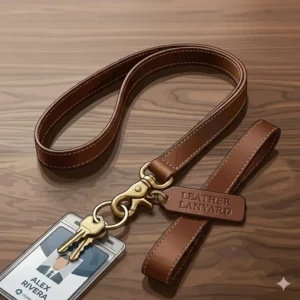
The First 30 Days: Breaking In and Leather Maintenance Guide
If you buy a high-quality hide, the first month requires a bit of active management. Unlike nylon, organic materials need to be conditioned to your specific use case.
Step 1: The Initial Flexing
When your new gear arrives (especially rigid models like Saddleback), it will likely retain the shape of its shipping box. Do not forcefully fold it in half, which can crack the surface grain. Instead, spend 10 minutes gently rolling it into a loose coil, then unrolling it. The friction from your hands warms the internal fibers, allowing them to relax naturally without structural damage.
Step 2: Sweat and Salt Management
During the first 30 days, your neck sweat acts as a catalyst. Sweat contains salt, which can dry out the natural oils. If you wear it against bare skin during a hot commute, wipe it down with a slightly damp (not wet) microfiber cloth at the end of the day. Every Friday for the first month, apply a pea-sized drop of a natural leather balm (like Smith’s or Chamberlain’s) to the back of the neck section. This creates a moisture barrier.
Step 3: The Hardware Check
Leather compresses under pressure. After two weeks of bearing the weight of your keys, the loop holding the metal hardware may loosen slightly. Check the rivets or stitching. If it features a screw-post (Chicago screw), take a screwdriver and tighten it. I’ve seen countless people lose their keys on week three simply because the leather compressed and the unscrewed post slipped out.
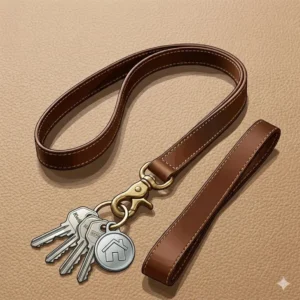
Real-World Scenarios: Matching Your Carry Needs
It is entirely possible to buy a five-star product and hate it because it wasn’t designed for your specific lifestyle. Let’s look at three distinct profiles to help you self-identify.
The Industrial Commuter (Warehouse, Construction, Field Tech)
If you are walking through active job sites, your biggest risk is snag hazards. You need durability, but you must prioritize safety. A thick, unbreakable strap without a breakaway feature is a severe choking hazard around heavy machinery. (In fact, OSHA guidelines strongly recommend breakaway lanyards near moving parts).
-
The Fix: You must opt for a model with a breakaway clasp, or purchase a heavy-duty model and use a breakaway magnetic adapter at the base.
The Corporate Minimalist (Office, Tech Campus, Healthcare)
You are carrying a single RFID badge and maybe an office key. Your primary concern is professional appearance and preventing the “badge flip” (where your ID constantly faces backward).
-
The Fix: Choose a lighter weight, soft-grain option like Thread Wallets or Portland Leather. Ensure it features a swivel clip, not a fixed split ring. The swivel allows the badge to rotate freely without twisting the leather around your neck.
The Heavy-Duty Custodial / Property Manager
You carry a brass ring with 15+ keys. Your current nylon strap cuts into the back of your neck by 2:00 PM every day.
-
The Fix: You need surface area to distribute the weight. Choose a wide, thick model like Saddleback. More importantly, you need a heavy-duty trigger snap or a solid brass carabiner integration. A standard lobster claw will snap under the torque of 15 keys swinging as you walk.
From Tangled Mess to EDC Perfection: A Problem-Solving Guide
Even the best setups face everyday friction. Here are the most common problems I see in the field, and how to permanently solve them.
Problem 1: The “Jingle” Effect
Walking down the hall sounding like a janitor is a major annoyance for office workers. Metal keys clashing against metal hardware amplifies sound.
-
The Solution: Insert a small rubber O-ring between your keys and the main metal clip. Alternatively, utilize a leather key silencer (a small leather bell that slides over the keys) at the end of the strap. This deadens the acoustic vibration completely.
Problem 2: Dark Stains on Light Shirts
If you bought a beautifully dyed mahogany or black strap, you might notice dark smudges on your white collars during the summer. This is called “crocking,” where unfixed dye rubs off due to sweat.
-
The Solution: Take a piece of heavy canvas or denim and rub the flesh side (the rough underside) vigorously for five minutes. This friction removes loose dye particles. Then, seal it with an acrylic resolene or a heavy beeswax rub to lock the remaining dye in place.
Problem 3: Hardware Fatigue
“My clip just won’t stay closed anymore.” This happens when the internal spring in a cheap zinc-alloy clip corrodes from humidity or simply wears out from opening it 20 times a day.
-
The Solution: Stop buying integrated clips. Look for a model that utilizes a heavy-duty split ring (like a standard keyring) securely riveted into the leather. You can then attach a high-quality brass carabiner to that ring. If the carabiner breaks, you just replace a $5 piece of hardware, rather than throwing away a beautifully broken-in $50 strap.
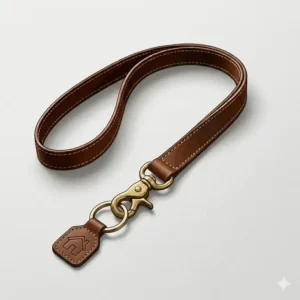
How to Choose a Leather Lanyard That Actually Lasts
When evaluating a new piece of carry gear, you have to look past the attractive styling and evaluate the structural integrity. Here is my 4-point decision framework.
-
Examine the Edge Finish: Are the edges raw, painted, or burnished? Painted edges look great on day one but often peel like a bad sunburn after six months of flexing. Burnished edges (where the leather is friction-rubbed with wax until glossy) are the hallmark of high-end durability. If the edges are raw, be prepared for some initial shedding.
-
Evaluate the Hardware Attachment: How does the metal connect to the material? Is it a single line of thin cotton stitching? That will rot. Look for heavy-duty rivets, Chicago screws, or thick, saddle-stitched bonded nylon thread. The connection point always fails before the hide itself does.
-
Assess the Drop Length: A standard drop is usually 18 to 20 inches. If you are 5’2″, a 20-inch drop will leave your keys swinging dangerously close to your belt line, catching on desks. If you are 6’4″, an 18-inch drop might feel like a bib. Measure from the back of your neck to your sternum to find your ideal drop length.
-
Check the Flex Factor: Vegetable-tanned leathers are rigid and require breaking in but mold perfectly to you. Chrome-tanned leathers are soft and chemically treated to be supple immediately but lack the structural memory of veg-tan. Choose based on your patience level for break-in periods.
Full-Grain vs. Genuine Leather: Features That Actually Matter
If there is one industry term that misleads consumers daily, it’s “Genuine Leather.” According to leather industry standards (and detailed on Wikipedia’s Leather entry), “genuine” simply means technically made of animal hide, but it is often the lowest quality layer, heavily sanded and stamped with an artificial texture.
When you see a spec sheet touting Full-Grain Leather, this means the topmost layer of the hide has been left intact, complete with all its natural imperfections, scars, and dense fiber structure.
Practical Interpretation:
Why does this matter for something that just hangs around your neck? Tensile strength. A genuine leather strap, over a year of supporting heavy keys and being pulled on to swipe an ID card, will stretch out, thin down, and eventually snap at the weakest point. A full-grain strap will not stretch significantly. It contains the strongest, tightest fibers of the hide. Furthermore, only full-grain absorbs oils properly to create a patina. Genuine leather just gets dirty; full-grain gets distinguished.
Table: Leather Grade Value Analysis
| Grade | Tensile Strength | Patina Potential | Average Lifespan | Cost-to-Value |
| Full-Grain | Maximum | Excellent | 5-10+ Years | High (Best ROI) |
| Top-Grain | High | Moderate | 3-5 Years | Good (Sweat spot) |
| Genuine | Low | None (Peels) | 6-12 Months | Poor (False economy) |
Expert Analysis:
The data above perfectly illustrates the “false economy” of cheap gear. While a Genuine leather option might save you $15 today, its lifespan of under a year guarantees you’ll buy it four times over the lifespan of a single Top-Grain alternative. For high-friction items worn daily, Full-Grain represents the only true long-term investment.
Common Mistakes When Buying Everyday Carry Lanyards
In my consulting work, I see the same three buying errors repeated constantly. Here is how to avoid them.
Mistake 1: Ignoring the Skin Contact Dynamic
Many buyers purchase a beautifully rugged, 1/4-inch thick strap that looks amazing on a work bench. But if you wear thin silk blouses or lightweight t-shirts, that heavy, unlined leather will cause severe friction burn on the back of your neck. Match the weight of the hide to the thickness of your typical clothing collar.
Mistake 2: Overloading a Safety Breakaway
People love the idea of a breakaway clasp for safety. However, they then load up the end with an ID badge, a heavy brass car fob, a pocket knife, and house keys. The combined weight creates a pendulum effect when you walk. Every time you take a hard step, the momentum of the heavy keys creates a micro-pull on the breakaway clasp, causing it to randomly pop open in the middle of a parking lot. If you carry heavy gear, you cannot use a standard magnetic or plastic breakaway.
Mistake 3: Treating it Like Paracord
Leather is skin. It breathes, stretches, and reacts to moisture. Treating it like synthetic paracord—leaving it in a 120-degree car dashboard baking in UV light, or letting it stay soaked after a rainstorm—will destroy the fibrous integrity. It will dry rot and crack.
Hardware Matters: Clips, Rings, and Breakaway Regulations
You aren’t just buying leather; you are buying a mechanical fastening system. The metal matters just as much as the hide.
-
The Lobster Claw: The most common attachment. It uses a tiny internal spring. Practical Reality: These are fine for lightweight IDs, but the internal spring will rust if you sweat heavily, causing the claw to stick open.
-
The Trigger Snap: A more robust mechanism where the spring is thicker and the thumb-stud offers better leverage. Practical Reality: Excellent for quick-detaching car keys to hand to a mechanic, but they can be bulky against your chest.
-
The Swivel Joint: An articulation point between the strap and the clip. Practical Reality: Essential for ID badges to prevent tangling. A non-swivel joint will drive you crazy if you have to swipe a card reader daily.
A Note on Compliance: If you work in aerospace, manufacturing, or heavy machinery, federal and local safety regulations mandate breakaway features to prevent strangulation if caught in a lathe or conveyor. Do not try to bypass this rule with a heavy-duty saddle leather strap. Your neck will break before a full-grain hide tears.
Long-Term Cost & The “Buy It For Life” Philosophy
Let’s do a quick Total Cost of Ownership (TCO) analysis.
A cheap, $8 nylon or “genuine” leather strap from a big box store will fray, its cheap pot-metal clip will snap, or the plastic breakaway will crack within 8 months. Over 5 years, you will replace it 7 times, spending $56, and enduring the frustration of dropping your keys multiple times.
A $45 premium full-grain strap with solid brass hardware requires a one-time purchase. Add $5 for a tin of leather conditioner that will last you a decade. Over 5 years, you spend $50. You actually save money, and more importantly, you eliminate the risk of hardware failure and the mental friction of dealing with broken gear. This is the core of the “Buy It For Life” (BIFL) philosophy.
✨ Don’t Miss These Exclusive Deals!
🔍 Ready to upgrade? Click on any highlighted item to check current pricing and availability. Grab a premium leather conditioner while you’re at it to ensure your new gear lasts a lifetime!
Conclusion: Your Next Step in Everyday Carry
Upgrading your neck carry is one of the highest-ROI improvements you can make to your daily workflow. You interact with your keys and ID badge dozens of times a day; every snag, twist, and uncomfortable chafe is a micro-distraction you don’t need.
Whether you opt for the century-lasting durability of the Saddleback, the office-ready convenience of Thread Wallets, or the rustic artisan charm of Hide & Drink, moving away from cheap synthetics to natural, molding materials will fundamentally change how you carry your gear. Remember my core advice: pay attention to the hardware as much as the hide, match the thickness to your wardrobe, and don’t be afraid of the break-in period.
Take a moment right now to assess your current setup. If the nylon is fraying or the clip is sticking, it’s time to make the switch. Your neck—and your peace of mind—will thank you.
Frequently Asked Questions
❓ What is the best way to clean a leather lanyard?
✅ Wipe it down with a slightly damp microfiber cloth to remove surface dirt and salt from sweat. Let it air dry completely away from direct heat, then apply a high-quality leather conditioner using your fingertips to restore natural oils and suppleness…
❓ Can I wear a leather lanyard in the shower or rain?
✅ Occasional light rain is fine, but you should never wear it in the shower or submerge it. Saturated leather loses its internal oils when it dries, leading to cracking, shrinking, and a loss of tensile strength over time…
❓ How do I soften a stiff new leather lanyard?
✅ Gently roll and massage the strap in your hands to loosen the fibers. Applying a light coat of neatsfoot oil or leather balm will also significantly accelerate the break-in process by lubricating the internal fiber structure…
❓ What does “breakaway” mean on a lanyard?
✅ A breakaway feature is a safety mechanism—usually a plastic snap or magnetic clasp located at the back of the neck—designed to instantly release under sudden pressure to prevent choking if the strap gets caught in machinery or grabbed…
❓ Will the dye from a leather lanyard stain my clothes?
✅ It can happen with cheaper, unsealed dyed leathers (called crocking), especially when mixed with neck sweat. High-quality burnished and sealed edges prevent this, but you can also buff the rough side vigorously with canvas to remove loose dye…
Recommended for You
- 5 Best Knife Lanyard Options for Faster Deployment in 2026 (Tested)
- 7 Best break away lanyard Options for 2026: Safety and Style Guide
- 5 Best Leather Key Holder Options to Eliminate Pocket Jangle in 2026
Disclaimer: This article contains affiliate links. As an Amazon Associate, I earn from qualifying purchases. If you purchase products through these links, we may earn a small commission at no additional cost to you.
✨ Found this helpful? Share it with your friends! 💬🤗
[addtoany]
